
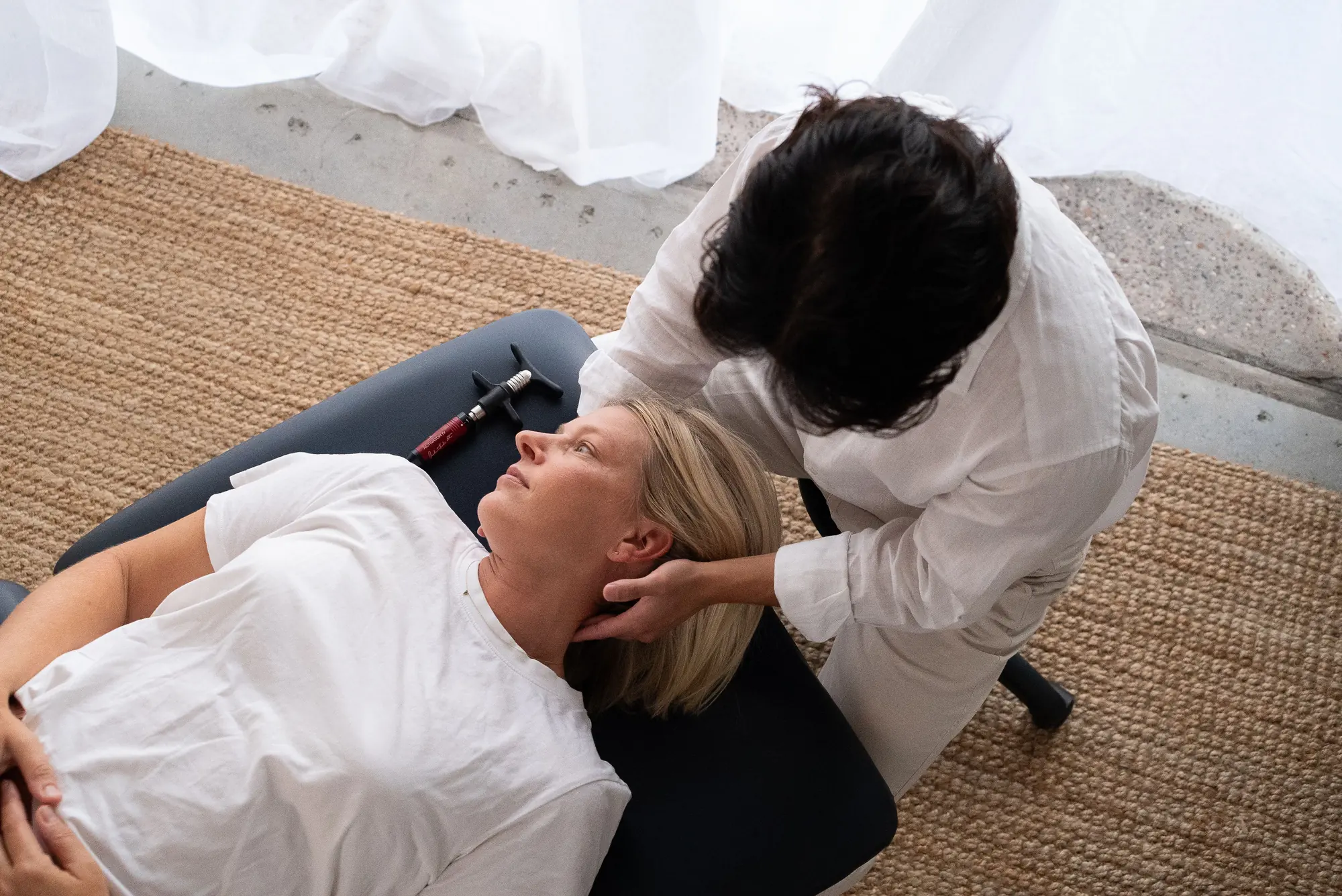
Headaches from the neck
Headaches that come from the neck are called cervicogenic headaches. Tension-type headaches, which feel like a tight band around the head, often come with tight neck and shoulder muscles too.
- A headache that starts at the base of the skull or the back of the head
- Pain that spreads over the head to the forehead, temple or behind one eye
- Usually one side, and the same side each time
- A stiff neck, or a headache brought on by certain neck positions or movements
- Pain that builds after long periods at a desk, driving or looking down
Many people have more than one type of headache, so your assessment looks at your whole headache pattern, not just your neck.
Migraines
A migraine is more than a bad headache. It is a condition of the brain and nervous system that comes in attacks, which can last from a few hours to a few days.
- A throbbing or pulsing headache, often on one side
- Sensitivity to light, sound or smells
- Nausea, or feeling generally unwell
- Visual changes before the headache, such as flashing lights or zigzag lines (aura)
- Pain that gets worse with activity, so you want to lie still in a dark, quiet room
- Neck pain or stiffness before or during an attack
Many people with migraine also have neck pain and tension. Our care focuses on what can be influenced: tension in the neck, upper back and jaw, and the triggers in your daily routine. For migraines, we work alongside your GP.
Know your triggers. Common migraine triggers include poor or irregular sleep, stress, skipped meals, not drinking enough water, long screen time and hormonal changes. Tracking your attacks helps you and us spot yours.
Common causes and triggers
Headaches and migraines usually build from a mix of load, habits and tension:
- Stiff or irritated joints at the top of the neck
- Tight muscles across the neck, shoulders and base of the skull
- Long hours at a screen, or a laptop set up too low (see desk and posture strain)
- Stress and poor sleep, which increase tension and sensitivity
- Skipped meals and not drinking enough water
- A past neck injury, such as whiplash
- Jaw clenching and grinding, which can add to tension around the head
A headache diary helps. Noting when each headache or migraine starts, where you feel it, how long it lasts and what you were doing helps us find the pattern. Bring it to your first visit if you can.
How we care for headaches and migraines
Every plan follows the same five steps, adapted to you.
Assess
We take a detailed history of your headaches or migraines and your triggers, then check how your neck and upper back move, test the muscles and nerves, look at your posture and jaw, and screen thoroughly so nothing is missed.
Explain
What we found, what type of headache you likely have, what we suggest, how long it should take and what it costs. Then you decide.
Treat
Gentle hands-on care for the neck, upper back and shoulders, which may include mobilisation, spinal manipulation and soft tissue work. We explain each technique, adapt it to your comfort and ask before we start.
Move
Gentle, low-load exercises for the deep neck and shoulder muscles, plus practical changes for your desk, screen time, sleep, meals and stress.
Review
We track how often your headaches or migraines come, how strong they are and how long they last, alongside how your neck moves, and space out visits as you improve.


Scans may be needed, depending on your assessment. If they are, we arrange the referral. For migraines, and whenever your assessment points to something beyond the neck, we work alongside your GP.
What the evidence says
Evidence-based chiropractic guidelines for headache and a clinical practice guideline for headaches associated with neck pain support:
- A thorough history and assessment to work out the type of headache
- Planning care together with you, alongside clear education
- Low-load exercise for the deep neck and shoulder muscles
- Spinal manipulation for headaches that come from the neck, and for migraine
- A combined approach for migraine that can include massage and soft tissue work
- Checking your progress at every visit
That is how we practise.
What you can do at home
- Keep regular routines. Regular sleep, meals and water through the day help with both headaches and migraines.
- Take screen breaks. Every 30 to 45 minutes, stand up, roll your shoulders and gently turn your head.
- Raise your screen so the top is at eye level, and bring a laptop up on a stand.
- Use heat or cool. A heat pack across the neck and shoulders for 15 to 20 minutes can ease tension. During a migraine, many people prefer a cool pack on the forehead in a dark, quiet room.
- Notice your jaw. If you clench during the day, let your teeth rest apart and your jaw relax.
- Keep a headache diary and bring it to your next visit.
Who we see with headaches and migraines
- Desk workers
Headaches that build through long days at a screen, with care that fits around your workday.
Care for desk workers- People with migraines
Regular migraines with neck and shoulder tension, cared for alongside your GP.
Your first visit- Parents and carers
Tension from feeding, carrying and broken sleep, with care planned around family life.
Care for every stage- Jaw clenching
Headaches alongside jaw tension or grinding, with myofunctional therapy as part of the plan where it suits.
Myofunctional therapy- Active adults
Headaches after a knock, a fall or contact sport, assessed carefully and cared for gently.
Care for active adults
Questions about headaches and migraines
Can a chiropractor help with headaches and migraines?
It can, particularly when the neck, upper back or jaw play a part. Chiropractic guidelines recommend spinal manipulation for headaches that come from the neck and for migraine, alongside exercise and advice, and that is how we combine them. At your first visit we assess your headache pattern and explain what we find.
What is the difference between a migraine and a headache?
A migraine is a specific type of headache. It is usually throbbing, often on one side, and comes with sensitivity to light or sound, nausea or a visual aura. A headache from the neck usually starts at the back of the head with neck stiffness, and a tension-type headache feels like a tight band around the head.
Can neck tension trigger migraines?
It can play a part. Many people with migraine also have neck pain, and neck tension is common before and during an attack. Easing neck and shoulder tension, alongside managing your other triggers, is part of how we care for migraine.
What is a cervicogenic headache?
It is a headache that comes from the neck, usually from the joints or muscles at the top of the spine. It typically starts at the back of the head on one side and spreads forward, often with neck stiffness.
Do I need a scan for headaches or migraines?
You may. Whether a scan is needed depends on what we find at your assessment. If imaging will help guide your care, we arrange the referral.
How many visits will I need for headaches or migraines?
It depends on the type of headache, how long you have had them, how often they come and what is driving them. You get a written plan with a clear timeline after your first visit, and we track your headaches and review the plan as you improve.
Can I claim headache or migraine treatment on my health fund?
Yes, if your extras cover includes chiropractic. We accept private health insurance.
Related conditions and services
Sources
- Bryans R, et al. Evidence-based guidelines for the chiropractic treatment of adults with headache. Journal of Manipulative and Physiological Therapeutics. 2011;34(5):274-289.
- Côté P, et al. Non-pharmacological management of persistent headaches associated with neck pain: a clinical practice guideline from the Ontario protocol for traffic injury management (OPTIMa) collaboration. European Journal of Pain. 2019;23(6):1051-1070.
- Healthdirect Australia. Migraine.
- Healthdirect Australia. Headaches.
This page is general information, not a diagnosis. Book an assessment for advice about your own situation.