
What sports injuries feel like
A sports injury can happen in a moment, or build slowly over weeks of training.
- Sudden pain during a game, run or session, often with a pull or twinge
- Swelling, bruising or tenderness over a muscle or joint
- Pain that builds over weeks as training ramps up
- Stiffness or weakness, or a joint that feels unstable
- Pain that stops you running, jumping, throwing or lifting
A sprain is a stretched or torn ligament, most often at the ankle, knee or wrist. A strain is a stretched or torn muscle or tendon, often in the hamstring, calf, groin or back.
Common causes
Most sports injuries come from a mix of load, recovery and the demands of your sport:
- A sudden jump in training, such as the start of the season or a new program
- Not enough recovery between sessions
- A previous injury that did not fully rehab
- Tackles, falls and awkward landings
- Changes in technique, footwear or equipment
Load, not long rest. After the first few days, gradually loading an injured muscle, tendon or ligament helps it recover. Long periods of complete rest tend to slow things down.
How we care for sports injuries
Every plan follows the same five steps, adapted to you and your sport.
Assess
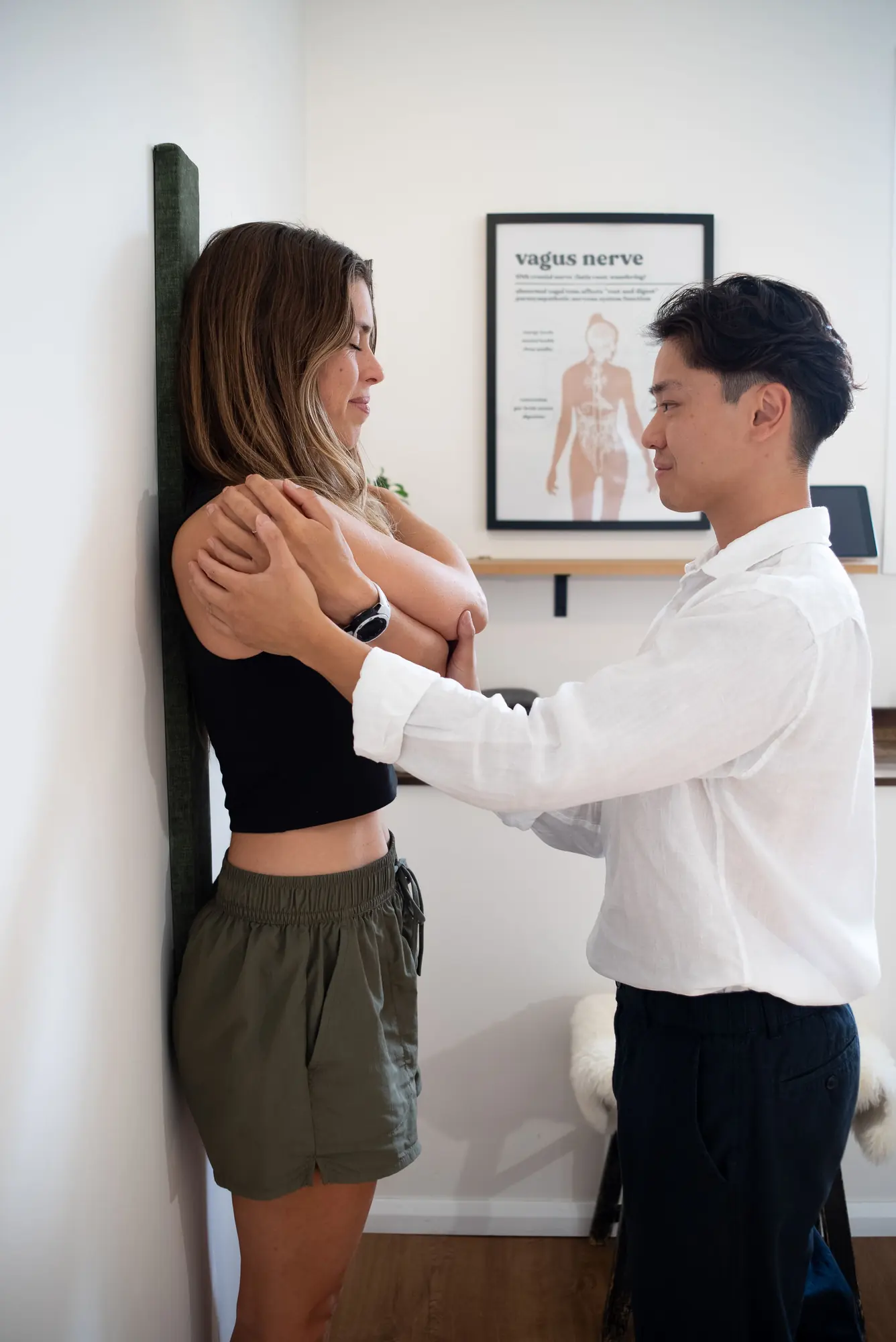
We hear how the injury happened and what your sport demands, then test the injured area, your strength, movement and control, and screen thoroughly so nothing is missed.
Explain
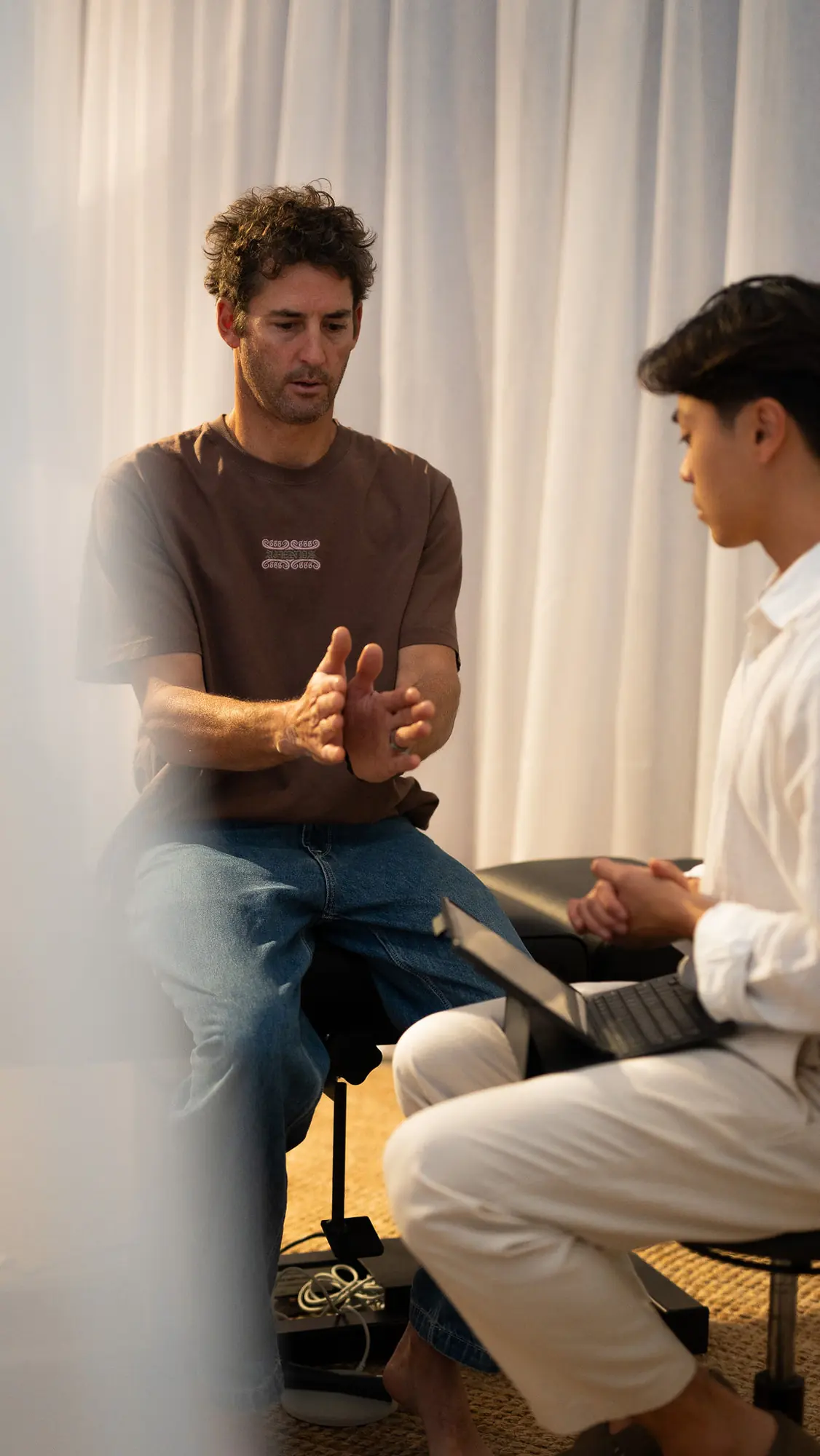
What is injured, what recovery usually looks like, what we suggest, how long it should take and what it costs. Then you decide.
Treat
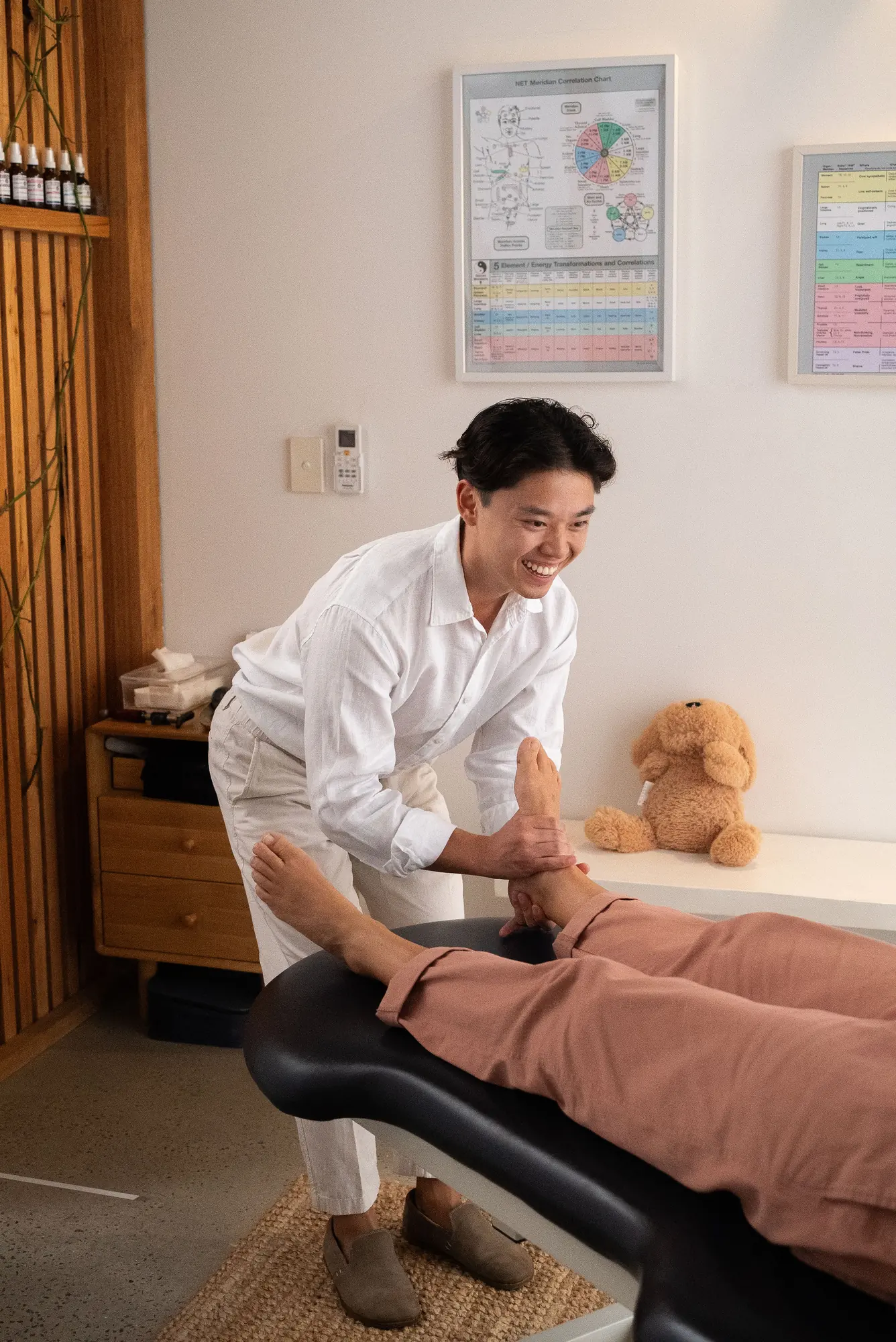
Hands-on care for the joints and soft tissues around the injury, used where it helps you move and load more comfortably. We explain each technique and ask before we start.
Rebuild
Progressive exercise that restores strength, range and control, then drills that match the movements of your sport.
Return
Clear milestones and retests before full training and games, so you return to your sport with confidence.

Scans may be needed, depending on your assessment. If they are, we arrange the referral.
What the evidence says
Current sports medicine advice for soft-tissue injuries, summed up in the British Journal of Sports Medicine, recommends:
- Protect the injury for the first few days, and elevate it when swollen
- Understand your injury, and favour active recovery over relying on passive treatments
- Load the injured tissue gradually, guided by pain
- Stay positive: confidence and optimism are linked to better recovery
- Keep fit with pain-free activity, and use exercise to restore strength, mobility and control
That is how we practise.
What you can do at home
- Protect it early. For the first few days, avoid what flares it, and raise a swollen ankle or knee when you can.
- Keep the rest of you moving with pain-free walking, cycling or swimming.
- Start gentle movement of the injured area as pain allows.
- Build back gradually. Increase training step by step rather than jumping straight back in.
- Warm up well, and build training load steadily across the season.
- Sleep and eat well. Recovery happens between sessions.
Who we see with sports injuries
- Weekend sport
Footy, netball, soccer, cricket and tennis, with a plan built around your season.
Care for active adults- Runners
From weekend running to marathons, with gradual loading and retests along the way.
Functional rehabilitation- Gym and strength
Lifting injuries and niggles, with a program that keeps you training where it is safe.
Functional rehabilitation- Junior athletes
Care adapted to growing bodies, with a parent or carer welcome in the room.
Paediatric chiropractic
Questions about sports injuries
Can a chiropractor help with sports injuries?
Yes, for many strains, sprains and overuse injuries. We assess the injury, use hands-on care where it helps, and build a staged exercise plan back to your sport, with retests along the way.
Should I rest a sports injury?
Only briefly. Protect it for the first few days, then start gentle movement and gradual loading as pain allows. Long periods of complete rest tend to slow recovery.
What is the difference between a sprain and a strain?
A sprain is a stretched or torn ligament, the tissue that holds a joint together, and often affects the ankle, knee or wrist. A strain is a stretched or torn muscle or tendon, often in the hamstring, calf, groin or back.
How long until I can play again?
It depends on the injury, how severe it is and the demands of your sport. You get a written plan with milestones after your first visit, and you return to full training when you pass the retests, not just when the pain goes.
Do I need a scan for a sports injury?
You may. Whether a scan is needed depends on what we find at your assessment. If imaging will help guide your care, we arrange the referral.
Do you see teenage athletes?
Yes. We see junior and teenage athletes, adapt care to their age and stage of growth, and a parent or carer is welcome in the room.
Can I claim sports injury treatment on my health fund?
Yes, if your extras cover includes chiropractic. We accept private health insurance.
Related conditions and services
Sources
- Dubois B, Esculier JF. Soft-tissue injuries simply need PEACE and LOVE. British Journal of Sports Medicine. 2020;54(2):72-73.
- Healthdirect Australia. Sprains and strains.
This page is general information, not a diagnosis. Book an assessment for advice about your own situation.