
What mid back pain feels like
Mid back pain can be a nagging ache that builds through the day, or a sharp catch that comes on with one movement.
- An ache or tightness between or around the shoulder blades
- Stiffness when you twist, reach or take a deep breath
- A sharp, catching pain with certain movements
- Pain that wraps around the side of the ribs
- Tight muscles across the upper back and shoulders
Pain in the mid back can come from several places, so your first visit includes a thorough assessment and screen.
Common causes
For most people, mid back pain comes from a mix of load, posture habits and stress:
- Long hours sitting at a desk or driving, especially slumped or leaning forward (see desk and posture strain)
- Lifting and carrying, including children, car seats and shopping
- Twisting sports such as golf, tennis, swimming and rowing (see sports injuries)
- A rib joint that has become stiff or irritated, often described as a rib out
- Stress, which tightens the muscles across the upper back
- Stiffness that builds with age, which is common and not always painful (see stiffness and mobility with age)
The mid back is built to move. Its joints connect to your ribs and are designed to twist and turn. Long periods in one position stiffen them, which is why gentle movement is usually part of the plan.
Rib pain and "a rib out"
Rib pain in the mid back is pain where a rib joins the spine, or pain that wraps around the side of your chest. Many people describe it as "a rib out" or "a rib out of place". Often, one of the small joints where a rib meets the spine has become stiff or irritated, or a muscle between the ribs is strained.
It often follows a twist, a lift, a hard cough or sneeze, a night sleeping awkwardly, or a twisting sport such as golf, tennis, swimming or rowing. Common signs include:
- A sharp or catching pain beside the spine, usually on one side
- Pain that wraps around the side of the ribs or chest
- Pain when you take a deep breath, cough, sneeze or twist
- Discomfort lying on that side, or getting comfortable in bed
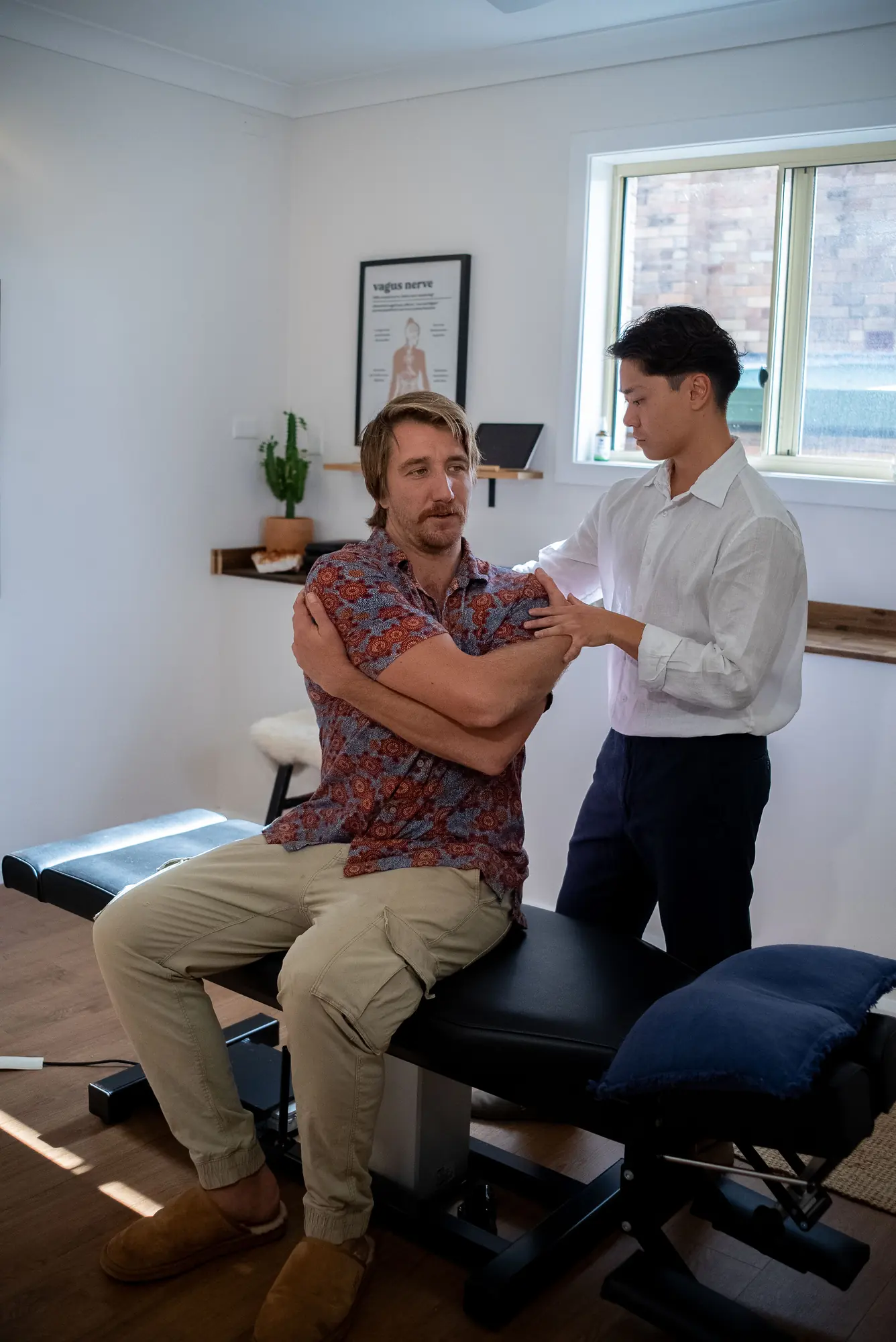
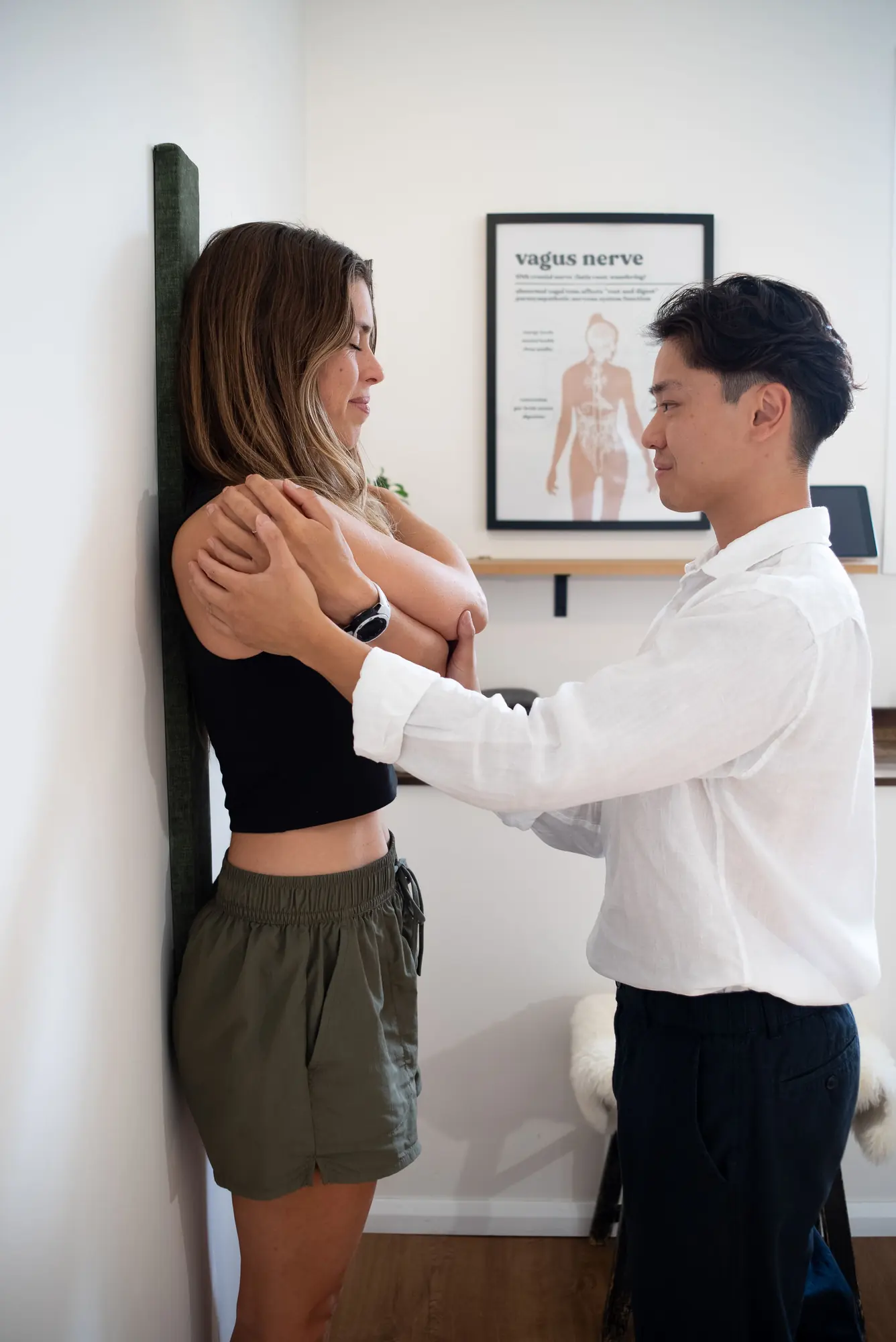
We check how your mid back and ribs move and how you breathe, and screen thoroughly so nothing is missed. Care may include gentle mobilisation of the rib joints, spinal manipulation and soft tissue work, with simple breathing and movement exercises for home. In pregnancy, rib discomfort is common as your posture shifts: see pregnancy care.
Costochondritis: pain at the front of the chest
Costochondritis is irritation of the cartilage where the ribs join the breastbone. It causes pain and tenderness at the front of the chest, often on one side, that can be sharper with deep breaths, coughing, lifting or twisting. It is usually diagnosed by your GP once other causes of chest pain have been checked, and we work alongside your GP.
Because the ribs connect to the spine at the back as well as the breastbone at the front, we assess how your ribs, mid back and breathing move together. Care may include gentle mobilisation of the rib and mid back joints, soft tissue work, and simple breathing and posture exercises.
How we care for mid back pain
Every plan follows the same five steps, adapted to you.
Assess
We hear how your pain started and what it stops you doing, then check how your mid back, ribs, neck and shoulders move, and screen thoroughly so nothing is missed.
Explain
What we found, what is likely driving your pain, what we suggest, how long it should take and what it costs. Then you decide.
Treat
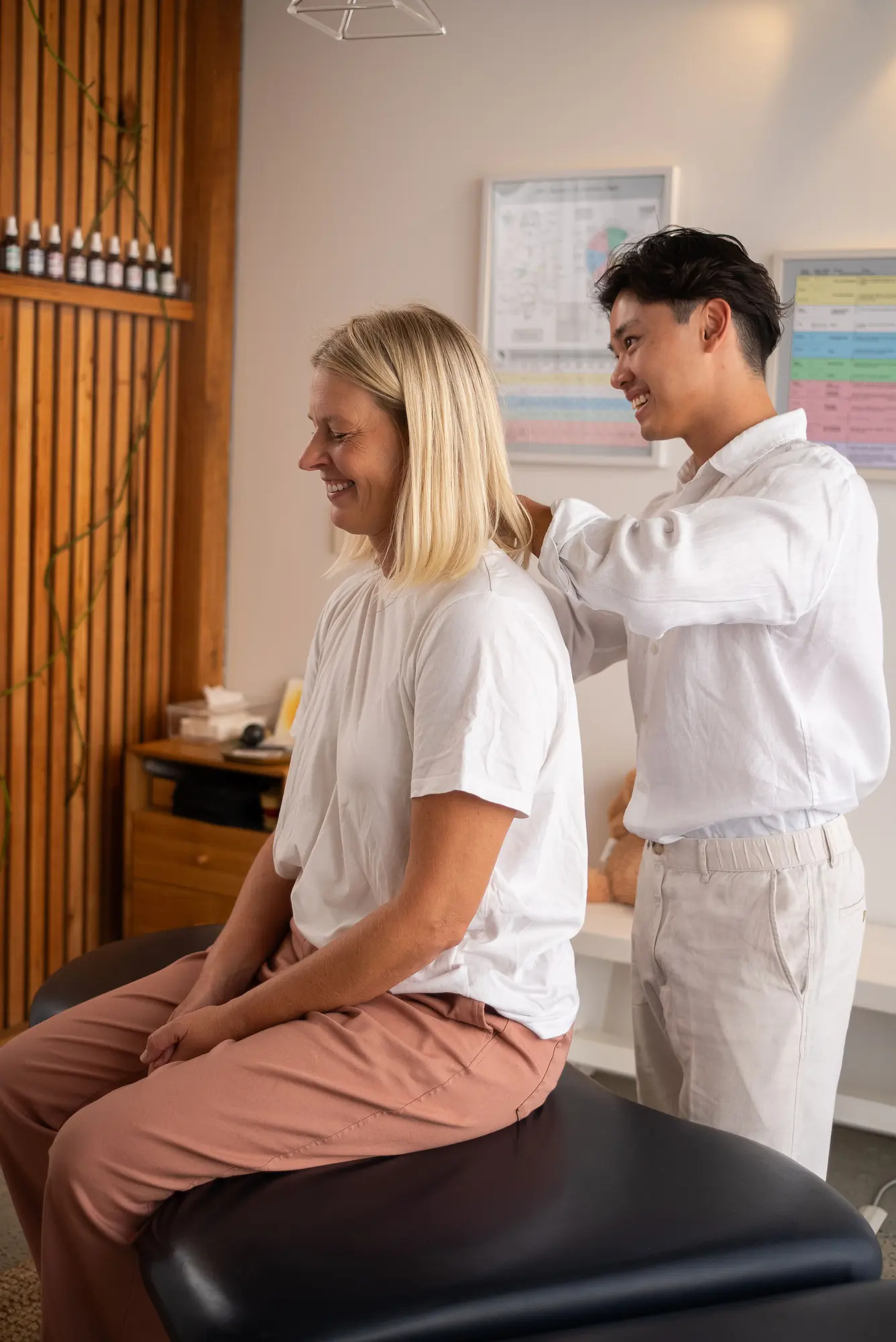
Gentle hands-on care for the mid back and ribs, which may include mobilisation, spinal manipulation and soft tissue work. We explain each technique and ask before we start.
Move
Simple mobility and strength exercises for home and work, plus practical advice for your desk, lifting and sport.
Review
We retest how you move at set points, track your progress against your goals, and space out visits as you improve.

Scans may be needed, depending on your assessment. If they are, we arrange the referral.
What the evidence says
Mid back pain is common, although it has been studied less than low back or neck pain. Care follows the same well-supported principles used for other back problems:
- A thorough assessment and screen
- A clear explanation and reassurance
- Staying active and keeping the mid back moving
- Exercise for mobility and strength
- Manual therapy, such as mobilisation and manipulation, alongside exercise and advice rather than on its own
That is how we practise.
What you can do at home
- Keep moving. Walking, gentle twisting and reaching, within comfort, usually help more than rest.
- Break up sitting. Stand, stretch your arms overhead and look around every 30 to 45 minutes.
- Breathe into your ribs. A few slow, deep breaths several times a day gently move the mid back.
- Try heat. A heat pack between the shoulder blades for 15 to 20 minutes can ease muscle tension.
- Set up your desk with the screen at eye level and a chair that supports your back.
- Carry loads close to your body, and swap sides with bags and children.
Who we see with mid back pain
- Desk workers
Stiffness that builds over long days at a screen, with early and late appointments.
Care for desk workers- Parents and carers
Lifting and carrying children, car seats and prams, with care planned around family life.
Care for every stage- Active adults
Mid back pain from golf, tennis, swimming or the gym, with goals and regular retests.
Care for active adults- Older adults
A stiff upper back that makes reaching and turning harder, with gentle, low-force options.
Care for older adults
Questions about mid back pain
Can a chiropractor help with mid back pain?
Yes, for many people. We combine gentle hands-on care, such as mobilisation and manipulation, with exercise and practical advice. At your first visit we explain exactly what we find and what we suggest.
What causes pain between the shoulder blades?
Most often long periods of sitting, lifting, twisting or stress, which stiffen the joints and tighten the muscles of the mid back. It can also come from the ribs or the neck, which is why we assess the whole area.
Should I rest or keep moving with mid back pain?
Keep moving, gently. Walking, gentle twisting and your normal activities, within comfort, usually help more than rest.
Can a chiropractor help with a rib out of place?
We can assess and care for it. What feels like a rib out of place is usually a stiff or irritated joint where the rib meets the spine, or a strained muscle between the ribs. We explain what we find, then use gentle hands-on care with simple breathing and movement exercises.
Do I need an X-ray for mid back pain?
You may. Whether a scan is needed depends on what we find at your assessment. If imaging will help guide your care, we arrange the referral.
How many visits will I need for mid back pain?
It depends on how long you have had the pain, what is driving it and your goals. You get a written plan with a clear timeline after your first visit, and we review it as you improve.
Can I claim mid back pain treatment on my health fund?
Yes, if your extras cover includes chiropractic. We accept private health insurance.
Related conditions and services
Sources
- Briggs AM, et al. Thoracic spine pain in the general population: prevalence, incidence and associated factors in children, adolescents and adults. A systematic review. BMC Musculoskeletal Disorders. 2009;10:77.
- Australian Institute of Health and Welfare. Back problems.
- Healthdirect Australia. Back pain.
This page is general information, not a diagnosis. Book an assessment for advice about your own situation.