
What hip pain feels like
Where you feel hip pain gives useful clues about where it is coming from.
- Pain on the outer side of the hip, often worse lying on that side
- Groin pain, or an ache deep in the hip joint
- Stiffness getting up from a chair or out of the car, or first thing in the morning
- Pain walking, climbing stairs or standing on one leg
- Clicking or catching in the hip
- Buttock pain that may come from the lower back or travel down the leg like sciatica
Common causes
Hip pain usually comes from one of a few places:
- Wear in the hip joint with age (osteoarthritis), the most common cause
- Irritated tendons at the side of the hip, common in mid-life
- Running, football and sports with twisting and kicking (see sports injuries)
- Long periods of sitting, then a sudden increase in activity
- Pregnancy and the months after birth
- Pain referred from the lower back
Exercise helps at any age. Guidelines strongly recommend exercise for hip osteoarthritis, and regular activity is important for keeping hips comfortable and strong.
How we care for hip pain
Every plan follows the same five steps, adapted to you.
Assess
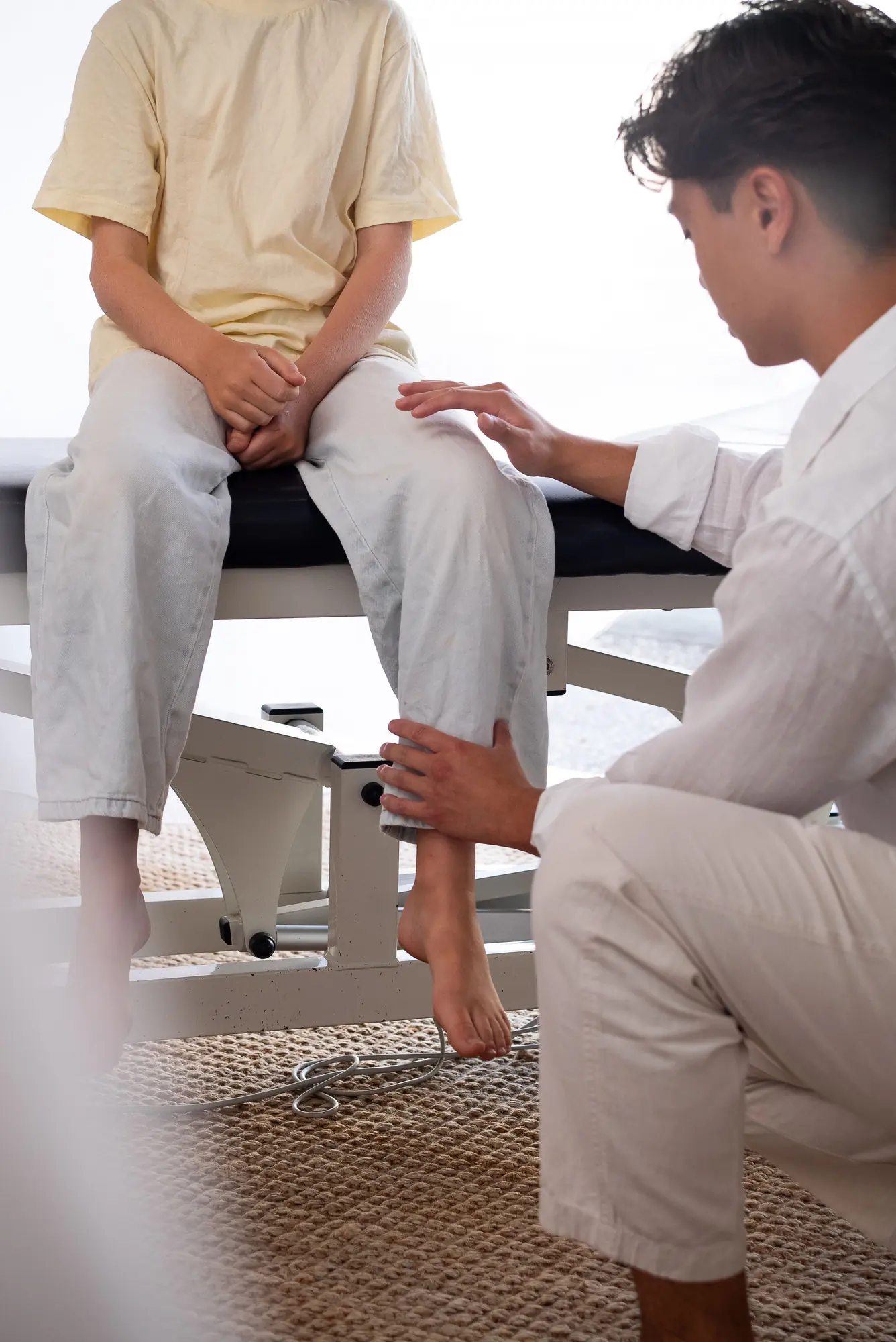
We hear how your pain started and what it stops you doing, then check your hip, pelvis and lower back, your strength and how you walk, and screen thoroughly so nothing is missed.
Explain
What we found, where your pain is likely coming from, what we suggest, how long it should take and what it costs. Then you decide.
Treat
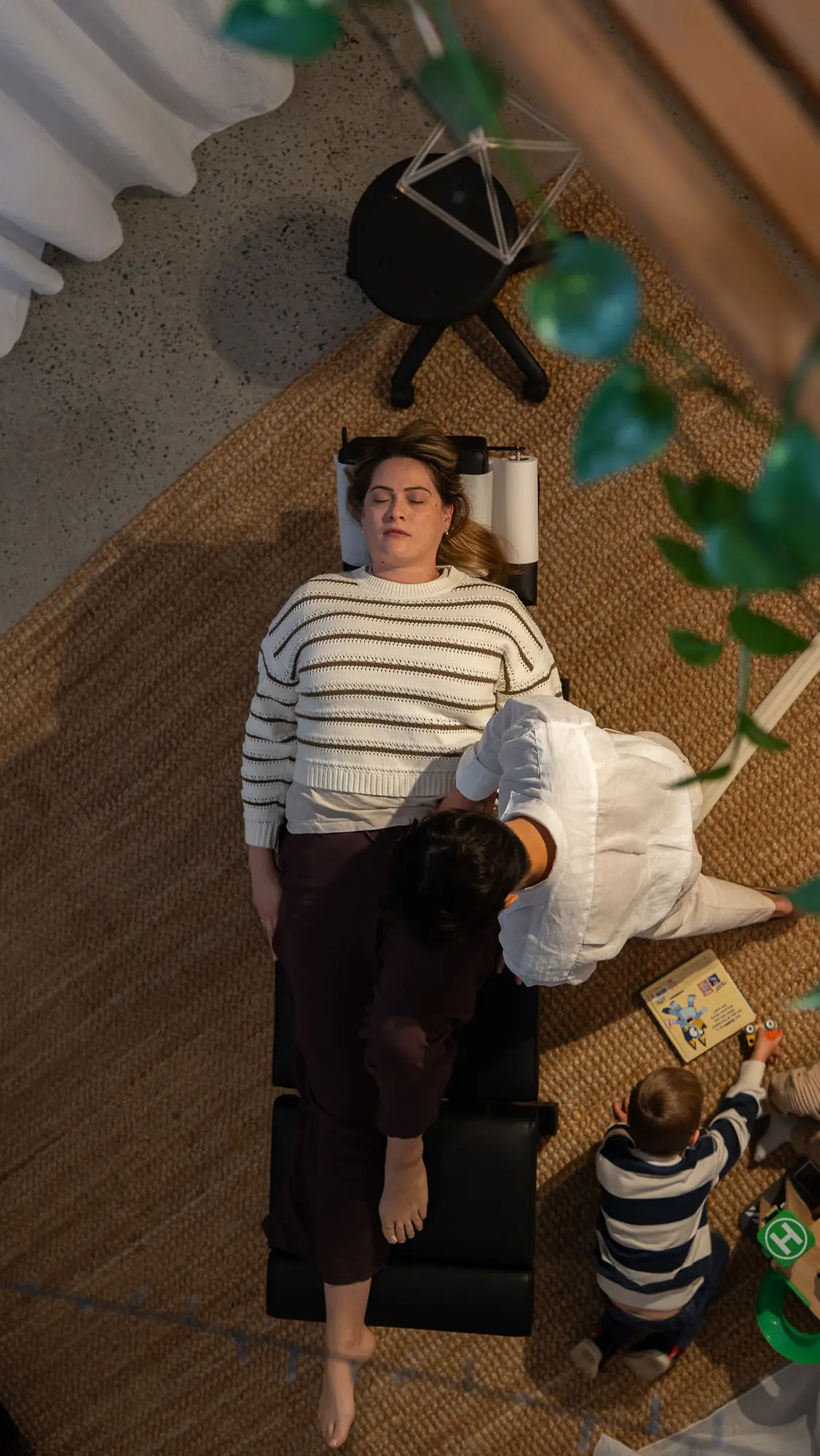
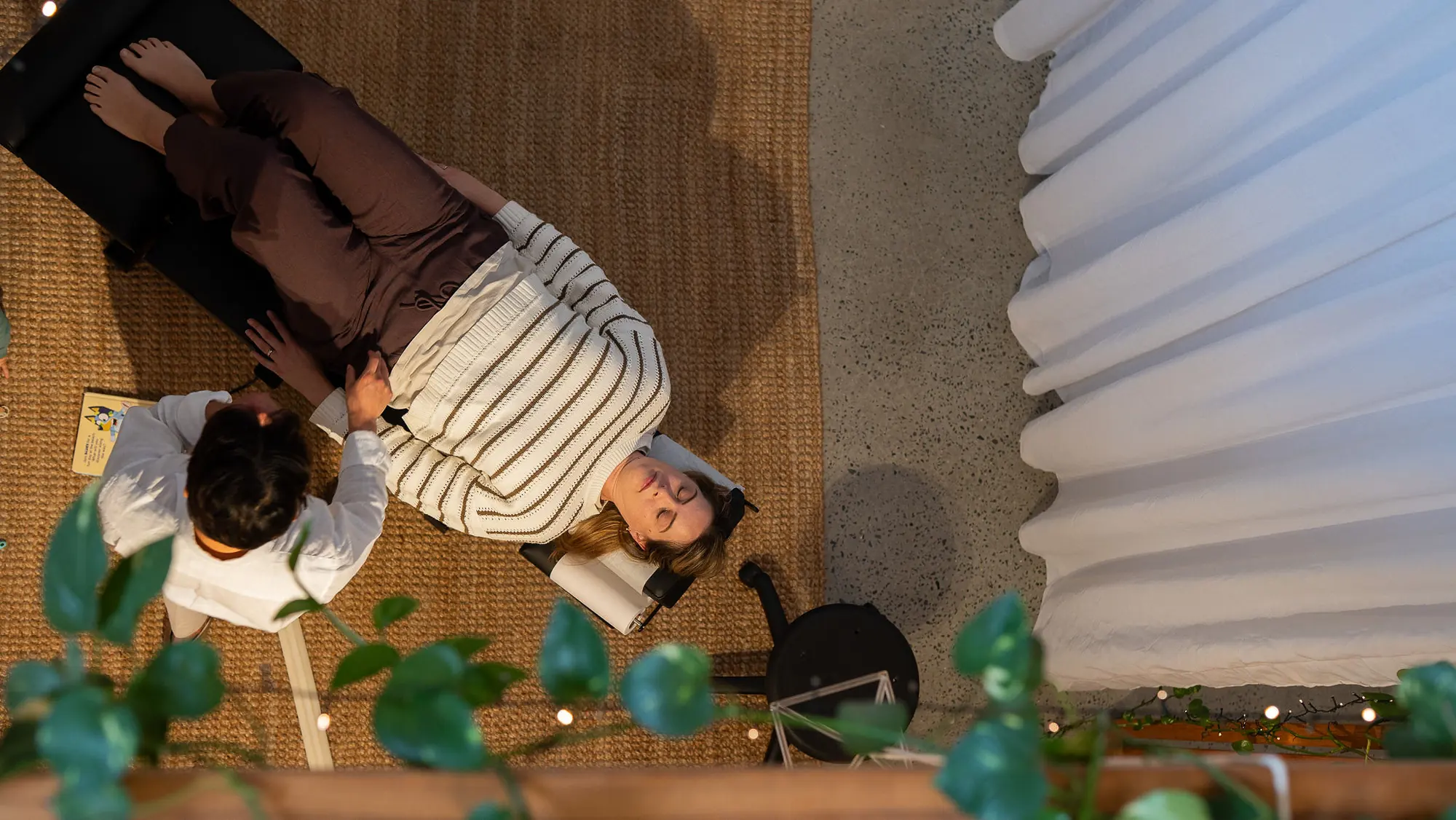
Gentle hands-on care for the hip, pelvis and lower back, used alongside exercise rather than on its own. We explain each technique and ask before we start.
Strengthen
Progressive exercises for the hip and trunk muscles, plus a walking plan that builds steadily.
Review
We retest your strength, movement and walking at set points, track your progress against your goals, and space out visits as you improve.
Scans may be needed, depending on your assessment. If they are, we arrange the referral.
What the evidence says
The RACGP guideline for knee and hip osteoarthritis and Healthdirect support:
- A thorough assessment to find the source of hip pain
- Exercise, including strengthening and walking, strongly recommended for hip osteoarthritis
- Education and support to manage your hip day to day
- Staying active to keep hips comfortable and strong
That is why exercise sits at the centre of every hip plan here.
What you can do at home
- Keep walking, in shorter, more frequent walks if longer ones flare your pain.
- Sleep on the other side with a pillow between your knees if the side of your hip hurts.
- Avoid crossing your legs and sitting in very low chairs for a while.
- Stand evenly on both feet rather than hanging on one hip.
- Do your strength exercises regularly, a few times a week.
- Try heat on a stiff hip for 15 to 20 minutes before moving.
Who we see with hip pain
- Runners and sport
Hip and groin pain from running, football and kicking sports.
Care for active adults- Mid-life adults
Side-of-hip pain that disturbs sleep, walking and stairs.
Functional rehabilitation- Older adults
Stiff, sore hips that limit walking and getting up from a chair.
Care for older adults- Pregnancy and new parents
Hip and pelvic pain as your body changes, and in the months after birth.
Pregnancy care
Questions about hip pain
Can a chiropractor help with hip pain?
Yes, for many people. Exercise that builds strength and movement is at the centre of care for hip pain, and we combine it with gentle hands-on care for the hip, pelvis and lower back where it helps.
Why does the side of my hip hurt at night?
Often because the tendons on the outer hip are irritated, and lying on that side presses on them. Sleeping on the other side with a pillow between your knees usually eases the pressure.
Is my hip pain coming from my back?
It can be. Pain from the lower back is often felt in the buttock and hip, so we assess your back, pelvis and hip together to find the source.
Can exercise help hip arthritis?
Yes. Guidelines strongly recommend exercise for hip osteoarthritis, including strengthening and walking. We build a program that fits your goals and your comfort.
Do I need a scan for hip pain?
You may. Whether a scan is needed depends on what we find at your assessment. If imaging will help guide your care, we arrange the referral.
How many visits will I need for hip pain?
It depends on the cause, how long you have had it and your goals. You get a written plan with a clear timeline after your first visit, and we review it as you improve.
Can I claim hip pain treatment on my health fund?
Yes, if your extras cover includes chiropractic. We accept private health insurance.
Related conditions and services
Sources
- Royal Australian College of General Practitioners. Guideline for the management of knee and hip osteoarthritis. 2nd edn. East Melbourne: RACGP; 2018.
- Healthdirect Australia. Hip pain.
- Healthdirect Australia. Osteoarthritis.
This page is general information, not a diagnosis. Book an assessment for advice about your own situation.