
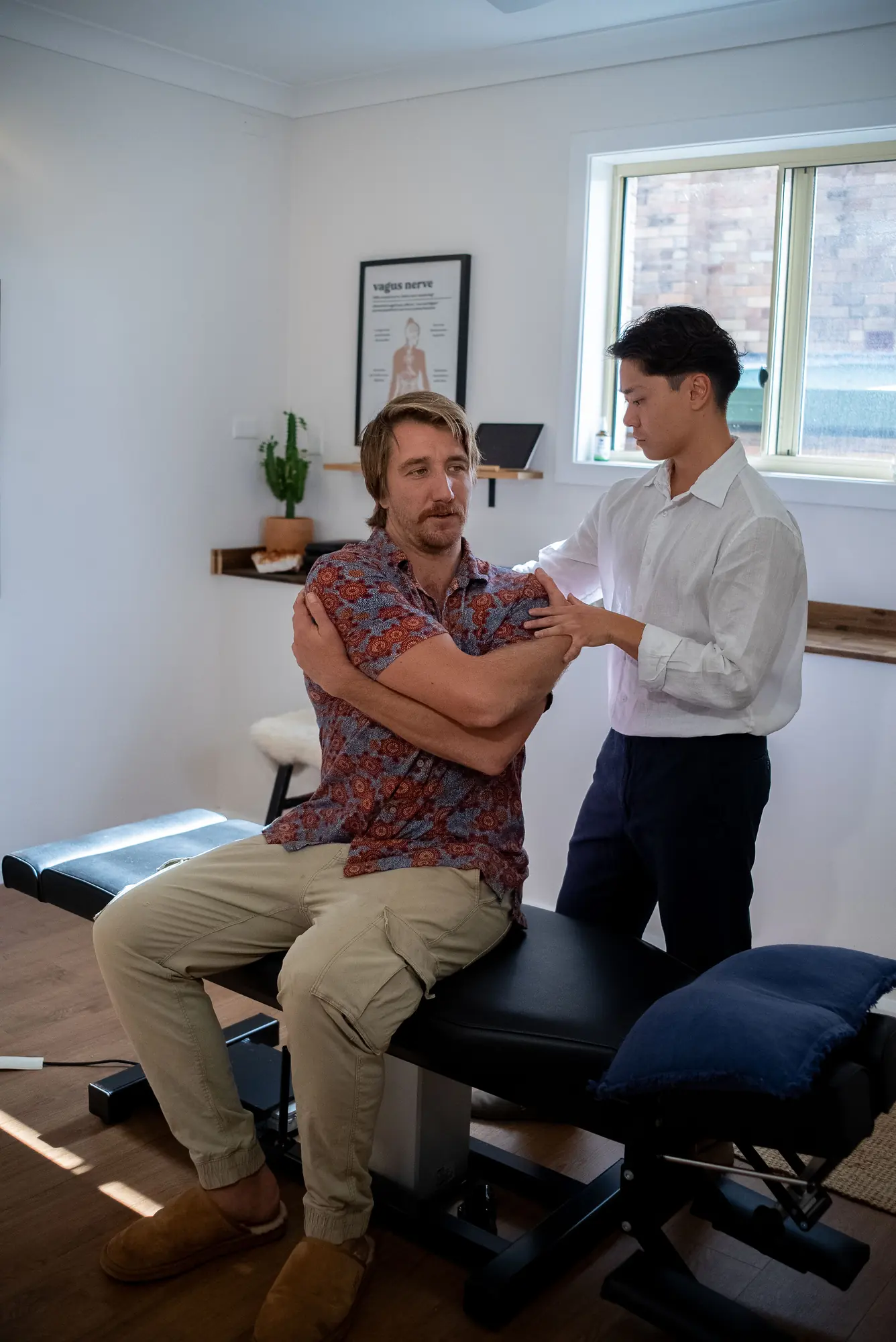


What shoulder pain feels like
Shoulder pain can come on after a big session or a fall, or build slowly with repeated lifting and reaching.
- Pain at the front or side of the shoulder, sometimes spreading down the upper arm
- Pain lifting your arm, especially overhead or out to the side
- Pain lying on the sore shoulder at night
- Weakness or catching when you reach, lift or throw
- Stiffness, with less movement than usual
- Neck and upper back tension on the same side
Pain that starts in the neck can also be felt over the shoulder, so we assess both.
Common causes
Most shoulder pain comes from load on the tendons and muscles around the joint:
- Overload of the rotator cuff tendons, often after a jump in lifting, throwing or overhead work
- Gym training, swimming, tennis and throwing sports (see sports injuries)
- Long hours of repetitive work at a desk or overhead
- Lifting and carrying children
- A fall onto an outstretched arm
- Age-related changes in the tendons, which are common and not always painful
Scan findings are common. Tendon changes and small tears show up on the scans of many people without shoulder pain, which is why we focus on how your shoulder moves and what you need it to do.
How we care for shoulder pain
Every plan follows the same five steps, adapted to you.
Assess
We hear how your pain started and what it stops you doing, then test your shoulder's movement and strength alongside your neck and upper back, and screen thoroughly so nothing is missed.
Explain
What we found, what is likely driving your pain, what we suggest, how long it should take and what it costs. Then you decide.
Treat
Hands-on care for the neck, upper back and the muscles around the shoulder, used where it helps you move and exercise more comfortably. We explain each technique and ask before we start.
Strengthen
Specific exercises for the rotator cuff and shoulder blade, done little and often, and built up gradually as your shoulder settles.
Review
We retest your strength and range at set points, track your progress back to work, sport or lifting, and space out visits as you improve.

Scans may be needed, depending on your assessment. If they are, we arrange the referral.
What the evidence says
A clinical guideline for shoulder pain from the rotator cuff area, developed by specialist medical societies, recommends:
- Diagnosis using a combination of clinical tests
- Care without surgery wherever possible
- Specific exercise, low in intensity and done often, with attention to relaxation and posture
- Changes at work when pain lasts longer than six weeks
That is why exercise sits at the centre of every shoulder plan here.
What you can do at home
- Keep it moving. Gentle movement within comfort helps more than holding your arm still.
- Modify, do not stop. Lighten the load and reduce overhead reaching for a while, rather than stopping everything.
- Sleep smarter. Lie on your back or other side, and hug a pillow with the sore arm.
- Do your exercises little and often. Short, regular sessions suit tendons best.
- Break up repetitive tasks at a desk or overhead with regular changes of position.
- Try heat. A heat pack across the neck and upper back for 15 to 20 minutes can ease tension.
Who we see with shoulder pain
- Gym and strength
Pressing and lifting niggles, with a program that keeps you training where it is safe.
Functional rehabilitation- Swimmers and throwers
Overhead sports, with a staged return and regular retests.
Care for active adults- Desk workers
Shoulder and neck tension from long days at a screen.
Care for desk workers- Parents and carers
Lifting, carrying and feeding, with care planned around family life.
Care for every stage
Questions about shoulder pain
Can a chiropractor help with shoulder pain?
Yes, for many people. We build care around specific, gradual exercise, which guidelines put at the centre of shoulder care, and use hands-on care for the neck, upper back and muscles around the shoulder where it helps.
Why does my shoulder hurt at night?
Lying on the sore side presses on irritated tendons, and many shoulder problems ache more when you are still. Sleeping on your back or other side, hugging a pillow with the sore arm, often helps.
Should I rest my sore shoulder?
Not completely. Keep it moving within comfort, ease back on the activities that flare it for a while, and start specific exercises early. Holding it still for long periods tends to make it stiffer.
Can neck problems cause shoulder pain?
Yes. Pain from the neck is often felt over the shoulder blade or the top of the shoulder, so we assess your neck and upper back as well as the shoulder itself.
Do I need a scan for shoulder pain?
You may. Whether a scan is needed depends on what we find at your assessment. If imaging will help guide your care, we arrange the referral.
How long does shoulder pain take to get better?
It depends on the cause and how long you have had it. Tendon pain often improves over weeks to a few months with the right exercise. You get a written plan with a clear timeline after your first visit.
Can I claim shoulder pain treatment on my health fund?
Yes, if your extras cover includes chiropractic. We accept private health insurance.
Related conditions and services
Sources
- Diercks R, et al. Guideline for diagnosis and treatment of subacromial pain syndrome. Acta Orthopaedica. 2014;85(3):314-322.
- Healthdirect Australia. Shoulder pain.
This page is general information, not a diagnosis. Book an assessment for advice about your own situation.