
What low back pain feels like
Low back pain is pain, stiffness or tension between the bottom of your ribs and the creases of your buttocks. It can come on suddenly after lifting or twisting, or build slowly over days of sitting.
- A dull ache or sharp pain across the lower back
- Stiffness first thing in the morning or after sitting
- Muscle spasm, or a feeling your back might give way
- Pain that spreads into the buttock or thigh
- Pain that is worse with bending, lifting, sitting or getting out of the car
Pain that travels below the knee, often with pins and needles or numbness, may be sciatica.
Common causes
For most people there is no single damaged structure to blame. Clinicians call this non-specific low back pain, and it is by far the most common type. It usually reflects a mix of load, movement and lifestyle:
- Lifting and carrying, especially kids, prams, car seats and shopping
- Long hours sitting at a desk, or in the car on the commute
- A sudden jump in activity, like a new gym program or a big weekend in the garden
- Pregnancy, as your posture and load change
- Poor sleep, stress and low activity, which all turn up pain sensitivity
- Less commonly, irritation of a disc or nerve, which can also cause leg pain
Pain does not always mean damage. Scans of people with no back pain at all often show disc bulges and wear, so these findings are common and are not always the cause. That is why we focus on how you move and what you need to get back to.
How we care for low back pain
Every plan follows the same five steps, adapted to you.
Assess
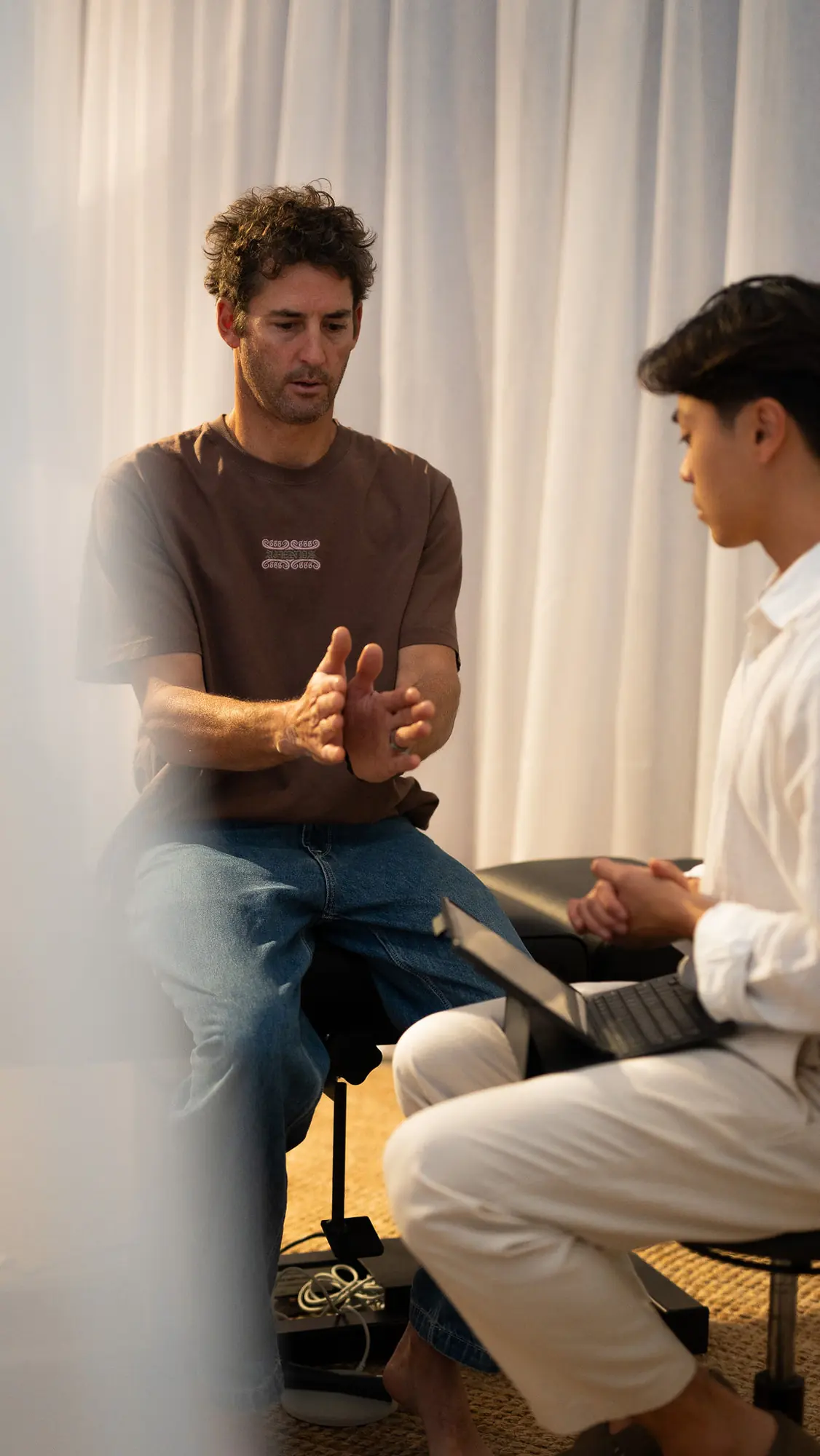
We hear how your pain started and what it stops you doing, then check how you move, your joints, muscles and nerves, and screen thoroughly so nothing is missed.
Explain
What we found, what is likely driving your pain, what we suggest, how long it should take and what it costs. Then you decide.
Treat
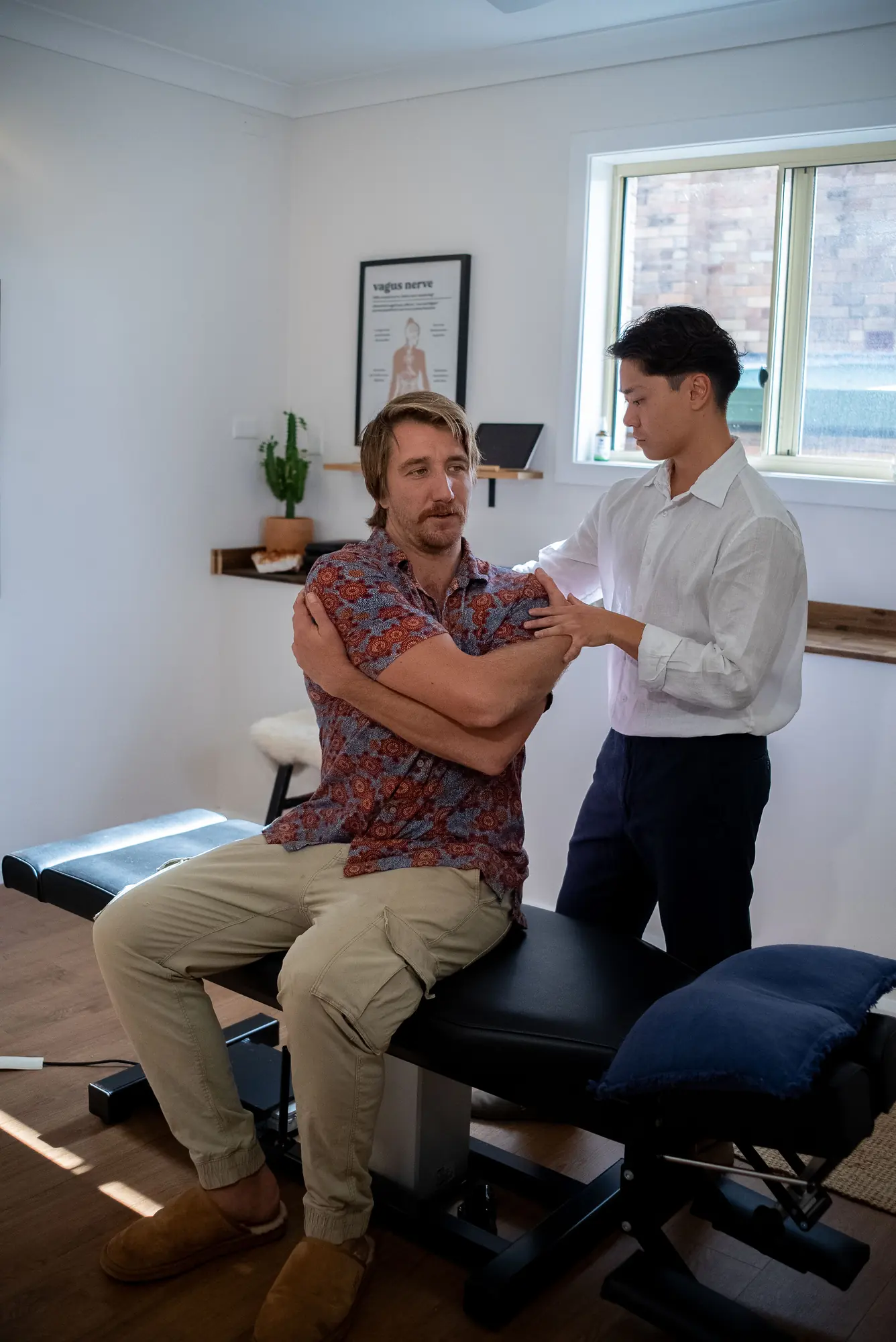
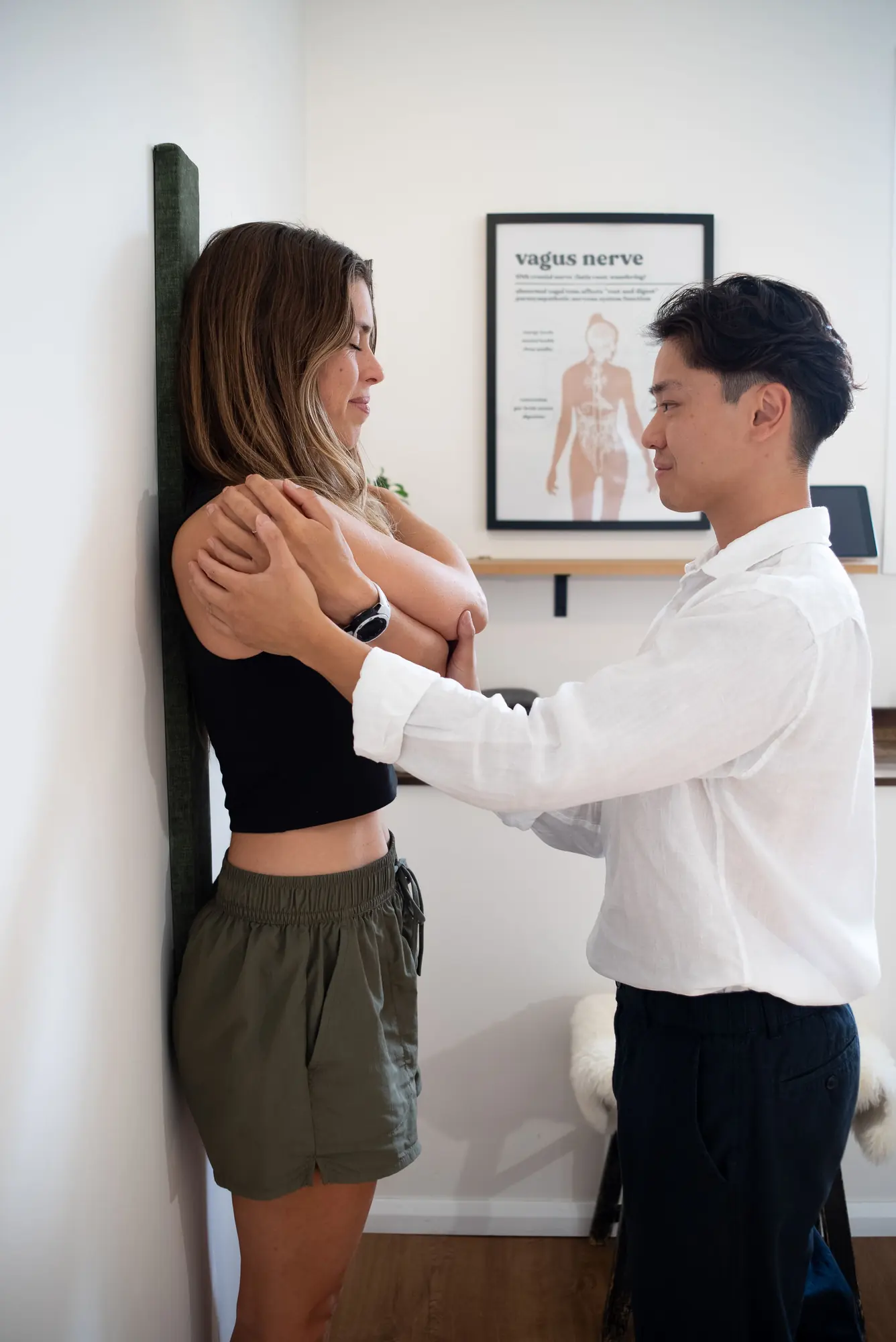
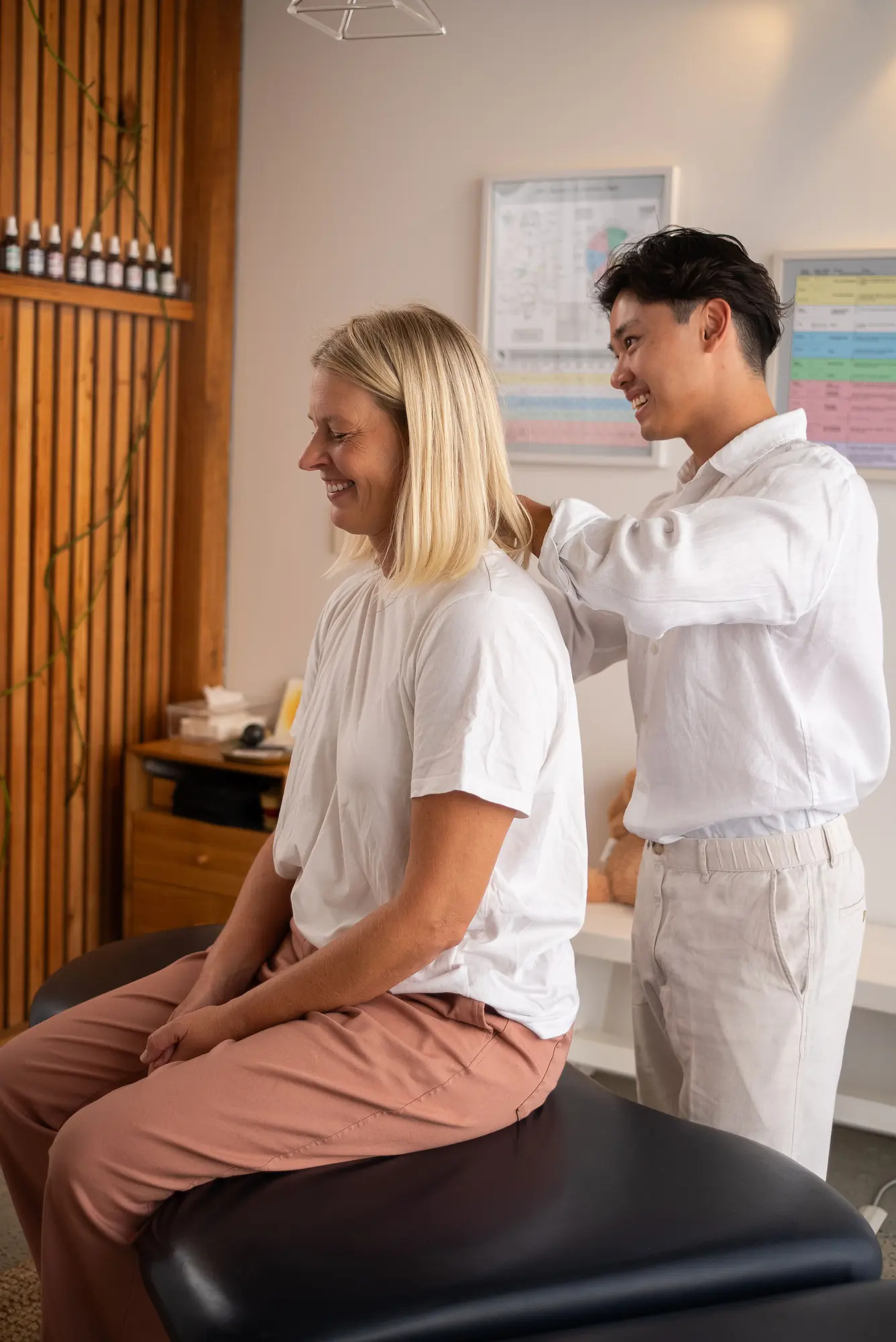
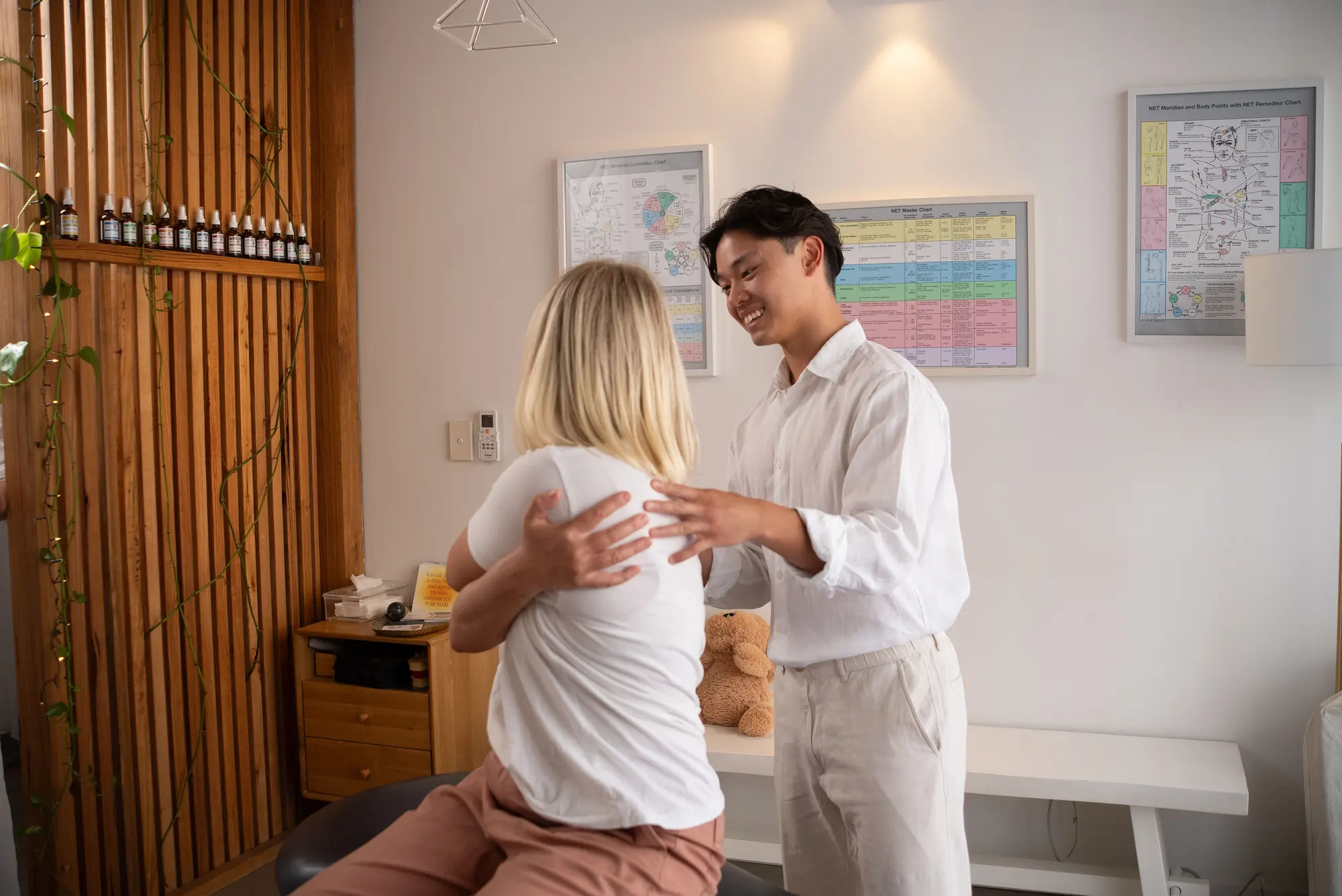
Gentle hands-on care, which may include spinal manipulation or mobilisation and soft tissue work. We explain each technique and ask before we start.
Move
A short home exercise plan, plus practical advice for sitting, lifting, sleeping and staying active while you recover.
Review
We retest how you move at set points, track your progress against your goals, and space out visits as you improve.
Scans may be needed, depending on your assessment. If they are, we arrange the referral.
What the evidence says
Australia's Low Back Pain Clinical Care Standard, released in 2022 and endorsed by 19 professional associations, sets out how new episodes should be managed. International guidelines such as the UK's NICE guideline say much the same:
- Assess thoroughly and screen for serious causes
- Explain and reassure, and use scans when the assessment calls for them
- Consider sleep, stress and mood, which all affect recovery
- Encourage staying active and returning to normal activities
- Build care on exercise and self-management
- Use manual therapy, including spinal manipulation, alongside exercise and advice rather than on its own
That is how we practise.
What you can do at home
- Keep moving. Gentle walking and your normal activities, within comfort, usually help more than rest.
- Avoid long periods in bed. It tends to slow recovery.
- Try heat. A heat pack wrapped in a towel for 15 to 20 minutes can ease muscle tension.
- Break up sitting. At a desk, stand or walk for a minute or two every 30 to 45 minutes.
- Lift in a way that feels comfortable, keeping the load close, and share heavy lifts while you are sore.
- Sleep however is comfortable. A pillow between or under your knees often helps.
Who we see with low back pain
- Desk workers
Long days sitting and long drives. We fit around your workday with early and late appointments.
Care for desk workers- Parents and carers
Lifting kids, prams and car seats all day, with care planned around family life.
Care for every stage- Pregnancy
Back and pelvic pain as your body changes, with pregnancy supports and gentle techniques.
Pregnancy back and pelvic pain- Active adults
Back pain that is stopping training or sport, with goals and regular retests.
Care for active adults- Older adults
Stiffness and pain that limits walking, gardening or time with the grandkids.
Care for older adults
Questions about low back pain
Can a chiropractor help with low back pain?
Yes, for many people. Guidelines list hands-on care such as spinal manipulation as an option for low back pain alongside exercise, advice and staying active, and that is how we combine it. At your first visit we explain exactly what we find and what we suggest.
Do I need an X-ray or MRI for low back pain?
You may. Whether a scan is needed depends on what we find at your assessment. If imaging will help guide your care, we arrange the referral.
How many chiropractic sessions will I need for low back pain?
It depends on how long you have had the pain, what is driving it and your goals. Many people with a new episode need a small number of visits over a few weeks. You get a written plan with a clear timeline after your first visit, and we review it as you improve.
Should I rest or keep moving with low back pain?
Keep moving, gently. Staying active and returning to normal activities as you can usually speeds recovery, while long periods of bed rest tend to slow it.
Is it safe to see a chiropractor with a disc bulge?
Often, yes, after a proper assessment. Disc bulges are common, including in people with no pain at all. We adapt care to you and use gentle techniques where needed. If your assessment shows further investigation is needed, we work alongside your GP to arrange it.
Why does my low back pain keep coming back?
Many people have more than one episode over their life. Staying active, keeping your strength up and knowing what to do early all reduce the impact, which is why every plan includes a home program.
Can I claim low back pain treatment on my health fund?
Yes, if your extras cover includes chiropractic. We accept private health insurance.
Related conditions and services
Sources
- Australian Commission on Safety and Quality in Health Care. Low Back Pain Clinical Care Standard. Sydney: ACSQHC; 2022.
- National Institute for Health and Care Excellence. Low back pain and sciatica in over 16s: assessment and management (NG59).
- Maher C, et al. Introducing Australia’s clinical care standard for low back pain. Chiropractic & Manual Therapies. 2023;31:17.
This page is general information, not a diagnosis. Book an assessment for advice about your own situation.