
What stiffness and reduced mobility feel like
Stiffness usually eases once you get moving, but it can make everyday things harder.
- Stiffness first thing in the morning, or after sitting for a while
- Finding it harder to turn your head, for example when reversing the car
- Aching knees, hips or back on walks or in the garden
- Less confidence on stairs, uneven ground or getting up from the floor
- Feeling less steady on your feet
- Tightness bending down to put on shoes or do the garden
Common causes
Stiffness with age usually comes from a mix of natural changes and how much we move:
- Natural changes in the joints and discs, which are common and not always painful
- Less activity, which leads to weaker muscles and stiffer joints
- Past injuries and years of physical work or sport
- Long periods of sitting
- Less day-to-day balance practice
It is never too late to get stronger. Strength and balance exercise helps at any age, and in older adults it reduces falls by around a quarter.
How we care for stiffness and mobility
Every plan follows the same five steps, adapted to you.
Assess
We take a full health history, then check how you move, walk and balance, and your strength, and screen thoroughly so nothing is missed.
Explain
What we found, what we suggest, how long it should take and what it costs, with plenty of time for your questions. Then you decide.
Treat
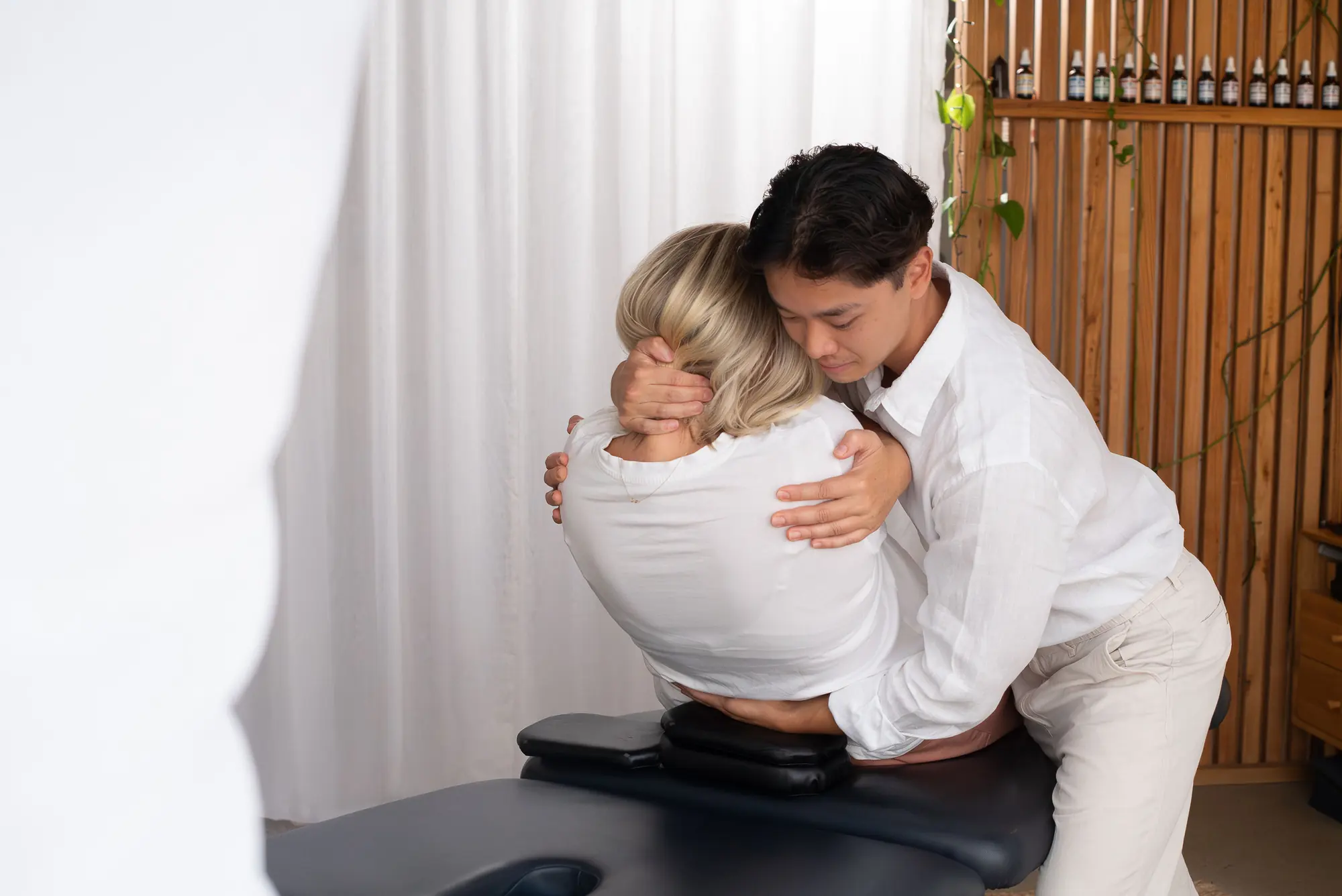
Gentle, low-force hands-on care for stiff joints and tight muscles. We explain each technique, ask before we start and only use what you are comfortable with.
Move
Simple strength and balance exercises for home, and a walking plan that builds steadily.
Review
We retest your movement, strength and balance at set points, so you can see your progress, and space out visits as you improve.
Scans may be needed, depending on your assessment. If they are, we arrange the referral.
What the evidence says
A Cochrane review of exercise for older people and Australia's movement guidelines for older adults support:
- Exercise targeting balance and strength, which reduces the rate of falls by around a quarter
- At least 30 minutes of activity on most days
- Strength exercises on two or more days a week
- Balance and mobility activities on three or more days a week
- Breaking up long periods of sitting as often as possible
That is why every plan here includes exercise you can do at home.
What you can do at home
- Move a little every day, building towards 30 minutes of walking or activity on most days.
- Strengthen twice a week, with sit-to-stands from a chair, step-ups or a class you enjoy.
- Practise balance by standing on one leg near a bench while the kettle boils.
- Break up sitting with a short walk or stretch every half hour or so.
- Warm up before gardening with gentle movement, and take regular breaks.
- Try heat on stiff joints for 15 to 20 minutes before moving in the morning.
Who we see with stiffness
- Grandparents
Keeping up with the grandkids, from the floor to the park.
Care for older adults- Gardeners and walkers
Staying comfortable for the things you love doing.
Functional rehabilitation- People with arthritis
Gentle care alongside exercise, to keep you moving.
Hip pain- Golf, bowls and tennis
Keeping your swing and your game, with regular retests.
Care for active adults
Questions about stiffness and mobility
Is chiropractic care suitable for older adults?
Yes. We use gentle, low-force techniques for older adults, adapt everything to your health and comfort, and take a full health history first.
Can you help with arthritis?
Yes, as part of a wider plan. Exercise is strongly recommended for hip and knee osteoarthritis, and we combine it with gentle hands-on care to help you move more comfortably.
Do you use gentle techniques?
Yes. Many older adults prefer low-force techniques, and we never use a technique you are not comfortable with. We explain each one and ask before we start.
What exercises help with stiffness?
Regular walking, strength exercises for the legs and trunk, and balance practice. We show you a short program you can do at home and build it up as you get stronger.
Can my family come with me?
Yes. Family members are always welcome in the room, and the clinic has free parking out the front and step-free entry.
Do I need a referral?
No. You can book directly online or by phone. You only need a GP referral if you are using a Medicare chronic condition management plan or a DVA Veteran Card.
Can I claim my care on my health fund?
Yes, if your extras cover includes chiropractic. We accept private health insurance.
Related conditions and services
Sources
- Sherrington C, et al. Exercise for preventing falls in older people living in the community. Cochrane Database of Systematic Reviews. 2019;(1):CD012424.
- Australian Government Department of Health, Disability and Ageing. Recommendations for older adults (65 years and over).
- Healthdirect Australia. Osteoarthritis.
This page is general information, not a diagnosis. Book an assessment for advice about your own situation.