
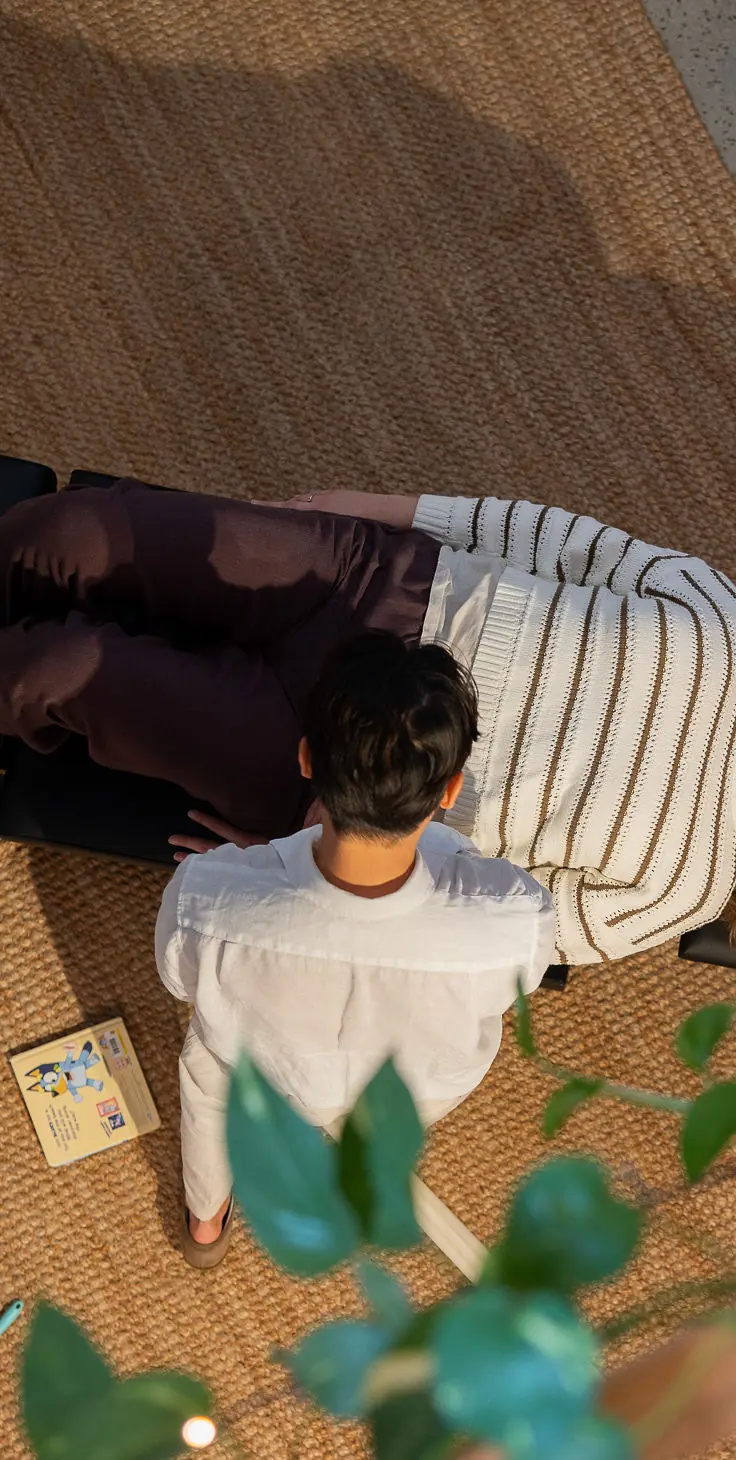
What sciatica feels like
Sciatica usually affects one leg. The leg pain is often worse than any back pain, and it can come on suddenly or build over a few days.
- Pain that runs from the buttock down the back or side of the leg, often below the knee
- A burning, sharp or electric feeling along the leg
- Pins and needles or numbness in the leg or foot
- Pain that is worse with sitting, bending, coughing or sneezing
- A feeling of weakness in the leg or foot
Pain that stays in the lower back and buttock, without travelling below the knee, is more often low back pain.
Common causes
Sciatica happens when a nerve root in the lower back is irritated or pressed on. The most common reasons are:
- A herniated disc in the lower back, where part of the disc presses on a nearby nerve
- Narrowing of the spaces around the nerves with age, which is more common in older adults
- Heavy lifting, twisting or a sudden jump in activity
- Long hours sitting, especially driving
- Pregnancy, when leg pain can come from the pelvis as well as the back, so we assess carefully
Disc herniations can shrink. Research shows the part of a disc that presses on a nerve is often reabsorbed by the body over time, especially larger herniations. It is one reason many people with sciatica improve with time and the right care.
How we care for sciatica
Every plan follows the same five steps, adapted to you.
Assess
We hear how your pain started and how far down the leg it travels, then check how you move, test the strength, reflexes and feeling in your legs, and screen thoroughly so nothing is missed.
Explain
What we found, what is likely irritating the nerve, what we suggest, how long it should take and what it costs. Then you decide.
Treat
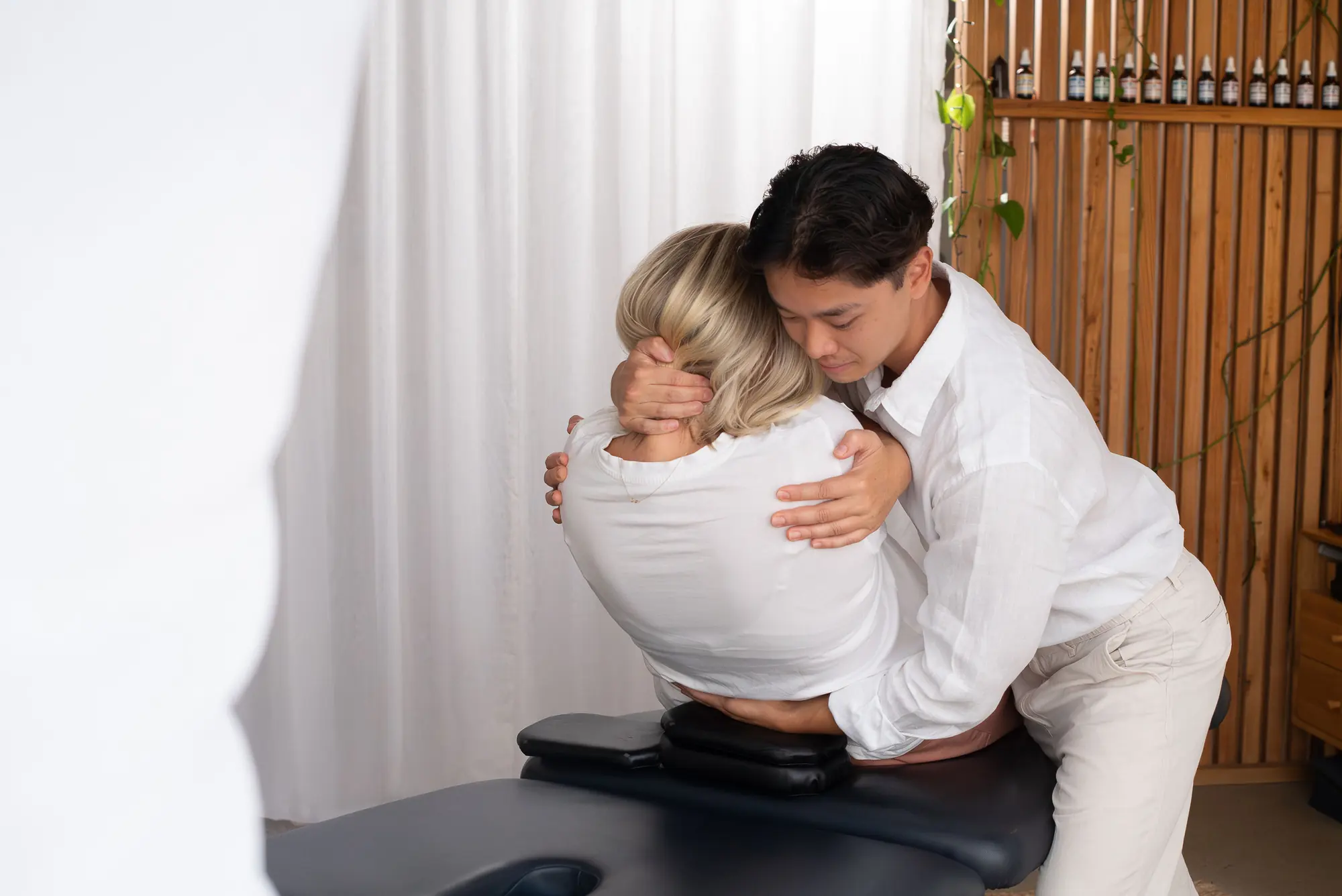
Gentle hands-on care for the lower back, pelvis and hips, which may include mobilisation, spinal manipulation and soft tissue work, adapted to how irritable the nerve is. We explain each technique and ask before we start.
Move
Positions and movements that ease your leg pain, a short home exercise plan, and practical advice for sitting, driving, sleeping and work.
Review
We retest your movement, strength and nerve signs at set points, track your progress against your goals, and space out visits as you improve.
Scans may be needed, depending on your assessment. If they are, we arrange the referral.
What the evidence says
The UK's NICE guideline for low back pain and sciatica and Australia's Low Back Pain Clinical Care Standard, which covers back pain with or without leg pain, recommend much the same approach:
- Assess thoroughly, including the nerves, and screen for serious causes
- Explain and reassure, and use scans when the assessment calls for them
- Stay active and keep up normal activities as much as you can
- Build care on exercise and self-management
- Use manual therapy, including spinal manipulation, as part of a package with exercise rather than on its own
That is how we practise.
What you can do at home
- Keep moving gently. Short walks and your normal activities, within comfort, usually help more than rest.
- Find your easing position. Many people are more comfortable lying on their back with the knees bent, or on their side with a pillow between the knees.
- Break up sitting. Stand and walk for a minute or two every 30 minutes, and use a small cushion behind your lower back when you drive.
- Try heat. A heat pack wrapped in a towel on the lower back or buttock for 15 to 20 minutes can ease muscle tension.
- Avoid long periods in bed. It tends to slow recovery.
- Go easy on heavy lifting while the leg pain is high, keep loads close and share them where you can.
Who we see with sciatica
- Desk workers and drivers
Long hours sitting or behind the wheel, with care that fits around your workday.
Care for desk workers- Active adults
Leg pain that is stopping your runs, training or sport, with a clear plan back to it.
Care for active adults- Pregnancy
Buttock and leg pain as your body changes, assessed carefully and cared for gently.
Pregnancy back and pelvic pain- Older adults
Leg pain when walking or standing, with gentle options and simple exercises for home.
Care for older adults
Questions about sciatica
Can a chiropractor help with sciatica?
Yes, for many people. Guidelines list manual therapy, including spinal manipulation, as an option for sciatica as part of a package with exercise and staying active, and that is how we combine it. At your first visit we explain exactly what we find and what we suggest.
How long does sciatica last?
It varies. Many people improve over several weeks to a few months, and it can take longer if the pain has been there for a while. You get a written plan with a clear timeline after your first visit, and we review it as you improve.
Do I need an MRI for sciatica?
You may. Whether a scan is needed depends on what we find at your assessment. If imaging will help guide your care, we arrange the referral.
Should I rest or keep moving with sciatica?
Keep moving, gently. Staying as active as you comfortably can usually helps more than bed rest, and we show you positions and movements that ease the leg pain.
Is it safe to see a chiropractor with sciatica?
Yes, after a proper assessment. We test your nerves, strength and reflexes first, adapt care to how irritable the nerve is and use gentle techniques where needed. If your assessment shows further investigation is needed, we work alongside your GP to arrange it.
What is the difference between sciatica and low back pain?
Sciatica is pain that travels down the leg because a nerve in the lower back is irritated, often below the knee. Low back pain stays mainly in the back and buttock. They often happen together, and your assessment shows which one is driving your pain.
Can I claim sciatica treatment on my health fund?
Yes, if your extras cover includes chiropractic. We accept private health insurance.
Related conditions and services
Sources
- National Institute for Health and Care Excellence. Low back pain and sciatica in over 16s: assessment and management (NG59).
- Australian Commission on Safety and Quality in Health Care. Low Back Pain Clinical Care Standard. Sydney: ACSQHC; 2022.
- Chiu CC, et al. The probability of spontaneous regression of lumbar herniated disc: a systematic review. Clinical Rehabilitation. 2015;29(2):184-195.
- Healthdirect Australia. Sciatica.
This page is general information, not a diagnosis. Book an assessment for advice about your own situation.