
What pregnancy back and pelvic pain feel like
Low back pain and pelvic girdle pain can happen separately or together, and both tend to build as pregnancy goes on.
- An ache across the lower back, often worse at the end of the day
- Pain over the buttocks or the back of the pelvis, on one or both sides
- Pain at the front of the pelvis, over the pubic bone
- Pain turning over in bed, getting out of the car or climbing stairs
- Pain standing on one leg, for example when getting dressed
- Pain spreading into the buttock or thigh, which can feel like sciatica
Pelvic girdle pain is sometimes called symphysis pubis dysfunction (SPD). It usually starts between 14 and 30 weeks of pregnancy.
Common causes
Pregnancy back and pelvic pain usually come from normal changes in your body:
- Your growing baby shifts your centre of gravity and changes your posture
- Pregnancy hormones soften the ligaments that support the pelvis
- Extra weight at the front of the body loads the lower back and pelvis
- Previous low back pain, or a past injury to the pelvis, which make it more likely
- Lifting and carrying toddlers while pregnant
- Long hours sitting or standing in one position at work
It usually settles after the birth. Pelvic girdle pain usually goes away within three months after the birth, although it can return in a later pregnancy. For some people the pain lingers and becomes long-standing, which is why rehabilitation after the birth matters: a gradual plan to rebuild strength and control through the core, pelvis and hips as your body recovers.
How we care for pregnancy back and pelvic pain
Every plan follows the same five steps, adapted to your stage of pregnancy.
Assess
A full health history covering your pregnancy and care team, then gentle tests of your lower back, pelvis and hips in comfortable positions, screening thoroughly so nothing is missed.
Explain
What we found, what is likely driving your pain, what we suggest, how long it should take and what it costs. Then you decide.
Treat
Gentle, low-force hands-on care for the lower back, pelvis and hips, with pregnancy supports and side-lying positions. We explain each technique and ask before we start.
Move
Simple exercises for strength and comfort, positions for sleep, and easier ways to do the daily tasks that hurt, from stairs to getting dressed.
Review
We review your plan as each trimester brings new changes, and after the birth as your body recovers.

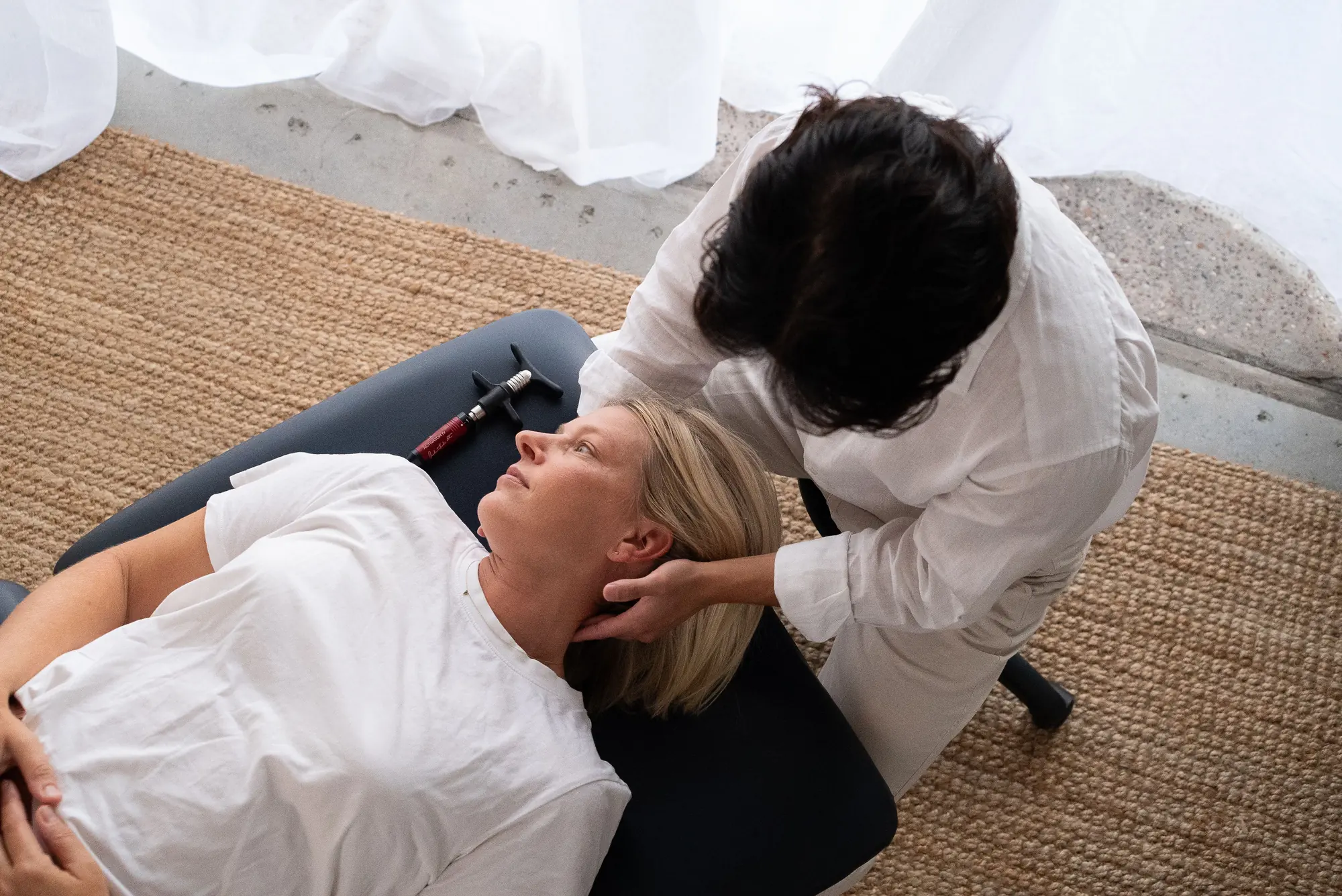

If your assessment shows further investigation is needed, we work alongside your GP or obstetrician.
What the evidence says
A Cochrane review of back and pelvic pain in pregnancy and the European guidelines for pelvic girdle pain found:
- Pelvic girdle pain is best identified with specific clinical tests of the pelvis
- Exercise in pregnancy may reduce back pain, and helps with daily tasks and staying at work
- Individual studies support manual therapy, and a combined approach of manual therapy, exercise and education, for pain and function
- Side effects of care, when reported, were minor and short-lived
That is how we practise.
What you can do at home
- Keep active. Walking, swimming and gentle exercise that feels comfortable usually help.
- Keep your knees together when you roll over in bed or get out of the car.
- Sleep on your side with a pillow between your knees and one under your bump.
- Take stairs one step at a time, and sit down to get dressed so you are not standing on one leg.
- Share the lifting, and avoid carrying a toddler on one hip for long periods.
Who we see with pregnancy back and pelvic pain
- Working through pregnancy
Long days at a desk or on your feet, with care that fits around work.
Care for desk workers- Parents of toddlers
Lifting and carrying little ones while pregnant, with care planned around family life.
Care in pregnancy- Active in pregnancy
Staying active safely, with exercise adapted to each trimester.
Functional rehabilitation- After the birth
The aches of feeding, carrying and lifting a newborn, with your baby welcome too.
Pregnancy care
Questions about pregnancy back and pelvic pain
Can a chiropractor help with back pain in pregnancy?
Yes, for many people. Research on back and pelvic pain in pregnancy supports exercise, and individual studies support hands-on care as part of a combined approach with exercise and education. We adapt every technique to your trimester and work alongside your GP or obstetrician.
Is chiropractic care suitable while I am pregnant?
Care in pregnancy is adapted to each trimester, using pregnancy supports and gentle techniques. We take a full health history first and work alongside your GP or obstetrician.
What is pelvic girdle pain?
It is pain in the joints of the pelvis during pregnancy, felt at the back of the pelvis, over the pubic bone or both. It is common, usually starts between 14 and 30 weeks, and often settles within three months after the birth.
How should I sleep with pregnancy back pain?
On your side, with a pillow between your knees and another under your bump. Keeping your knees together as you roll over or get out of bed also takes strain off the pelvis.
Will my back pain go away after the birth?
It usually settles, often within three months after the birth, although it can return in a later pregnancy. For some people it lingers, so rehabilitation after the birth matters, rebuilding strength through the core, pelvis and hips. We also care for the aches that come with feeding, carrying and lifting a newborn.
Do I need a referral?
No. You can book directly online or by phone. Please let your GP or obstetrician know you are seeing us, and bring any pregnancy records you have.
Can I claim pregnancy back pain care on my health fund?
Yes, if your extras cover includes chiropractic. We accept private health insurance.
Related conditions and services
Sources
- Liddle SD, Pennick V. Interventions for preventing and treating low-back and pelvic pain during pregnancy. Cochrane Database of Systematic Reviews. 2015;(9):CD001139.
- Vleeming A, et al. European guidelines for the diagnosis and treatment of pelvic girdle pain. European Spine Journal. 2008;17(6):794-819.
- Pregnancy, Birth and Baby. Pelvic girdle pain in pregnancy.
- Pregnancy, Birth and Baby. Backache in pregnancy.
This page is general information, not a diagnosis. Book an assessment for advice about your own situation.