
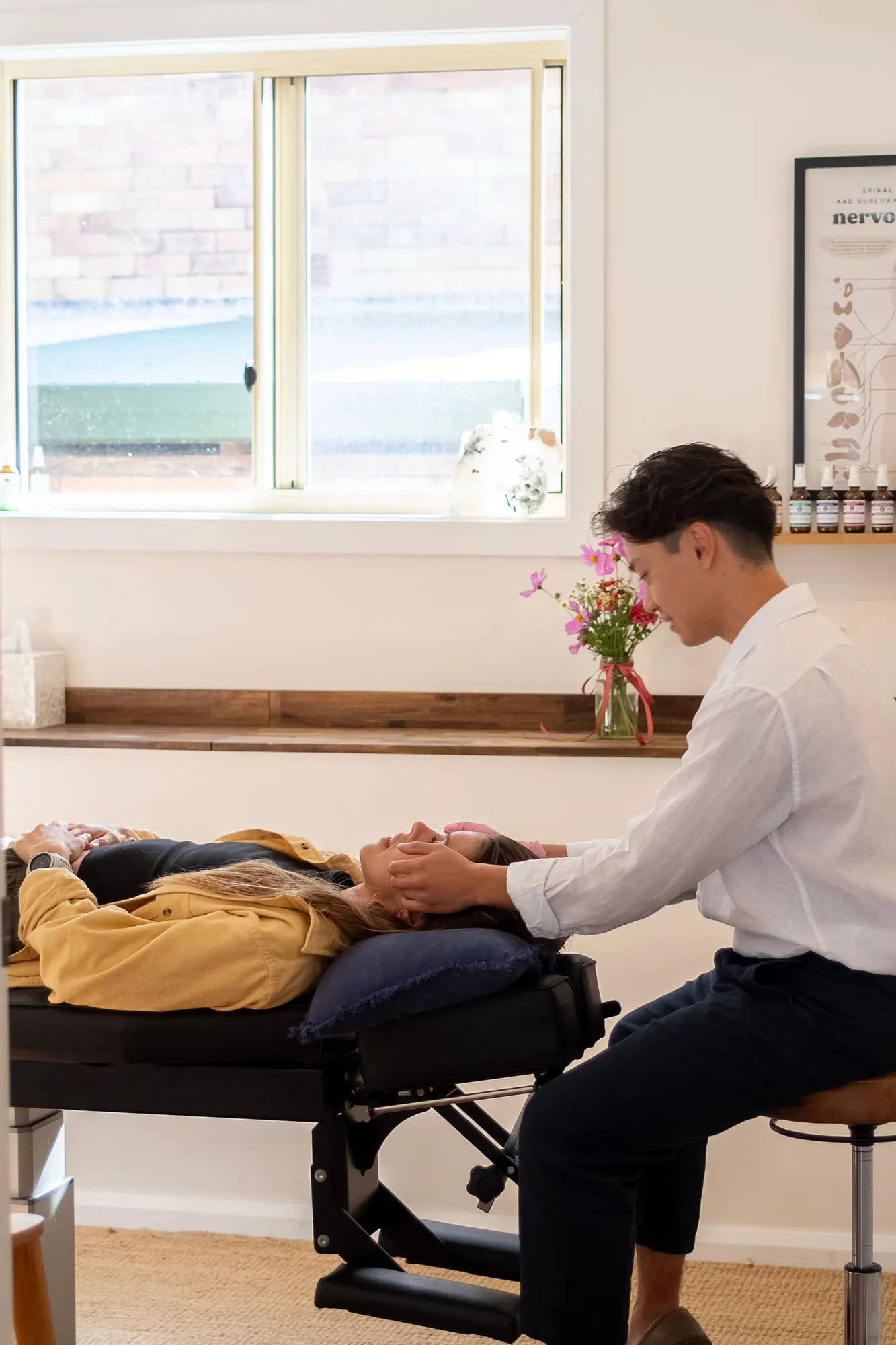
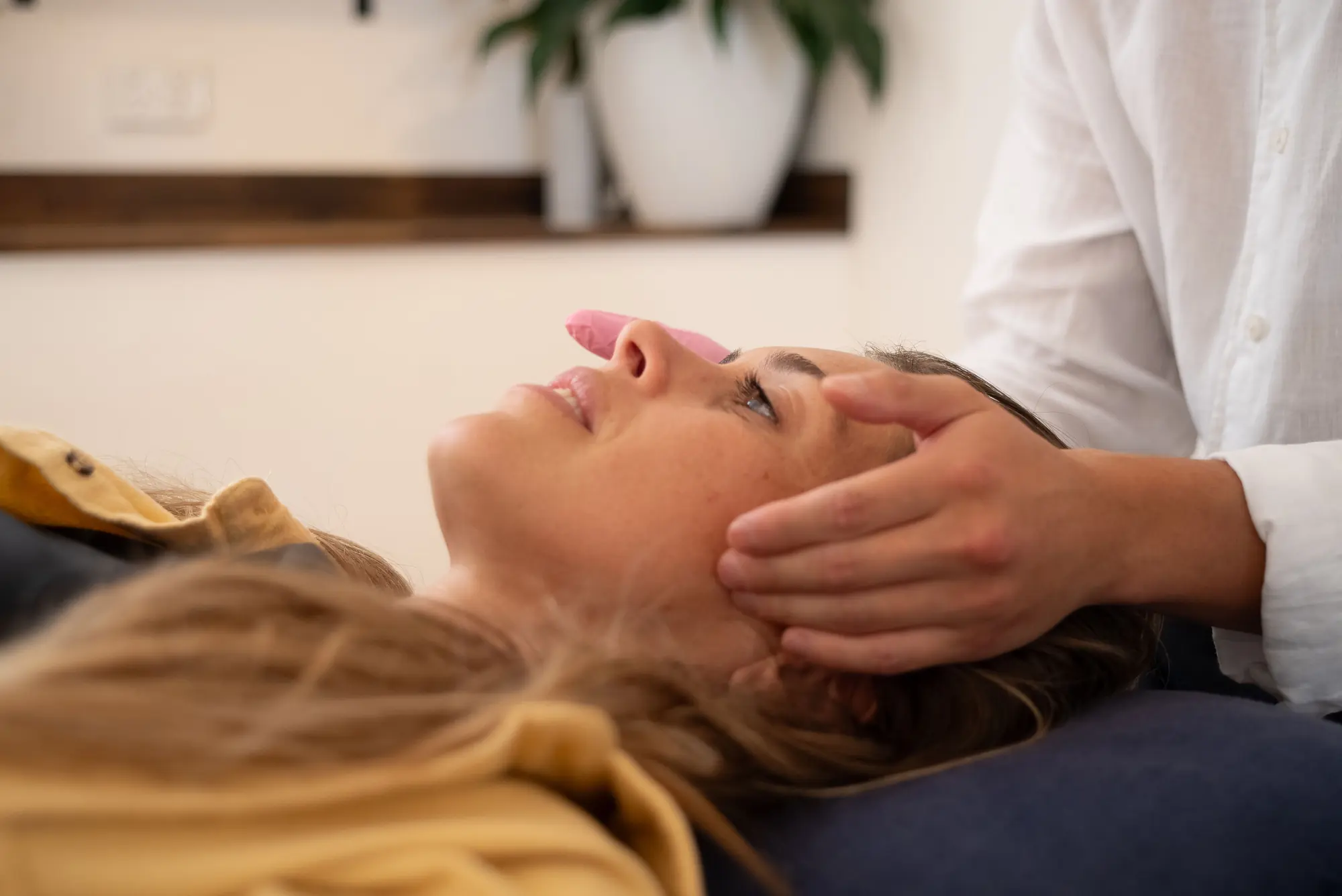
What jaw pain and TMJ feel like
The temporomandibular joint (TMJ) is the joint on each side of your jaw, just in front of your ear. TMJ dysfunction is common, and it can involve the joint, the muscles around it or both.
- A dull ache in the jaw, in front of the ear or at the temples
- Clicking or a grinding feeling when you chew or open your mouth
- A jaw that feels stiff, or locks or catches as you open or close
- Pain chewing, yawning or talking for a long time
- Tired, tight jaw muscles, especially in the morning
- Headaches and neck tension on the same side
Common causes
Jaw pain usually builds from a mix of habits, load and tension:
- Clenching and grinding, often linked to stress and often at night
- An injury to the jaw
- An uneven bite
- How the tongue and jaw rest, such as a low tongue posture or mouth breathing
- Neck and upper back tension, including from long hours at a desk (see desk and posture strain)
- Chewing gum or tough foods often
It usually settles. In most cases TMJ dysfunction improves over time, and symptoms can ease on their own. Gentle care and simple daily habits help you stay comfortable while it settles.
How we care for jaw pain and TMJ
Every plan follows the same five steps, adapted to you.
Assess
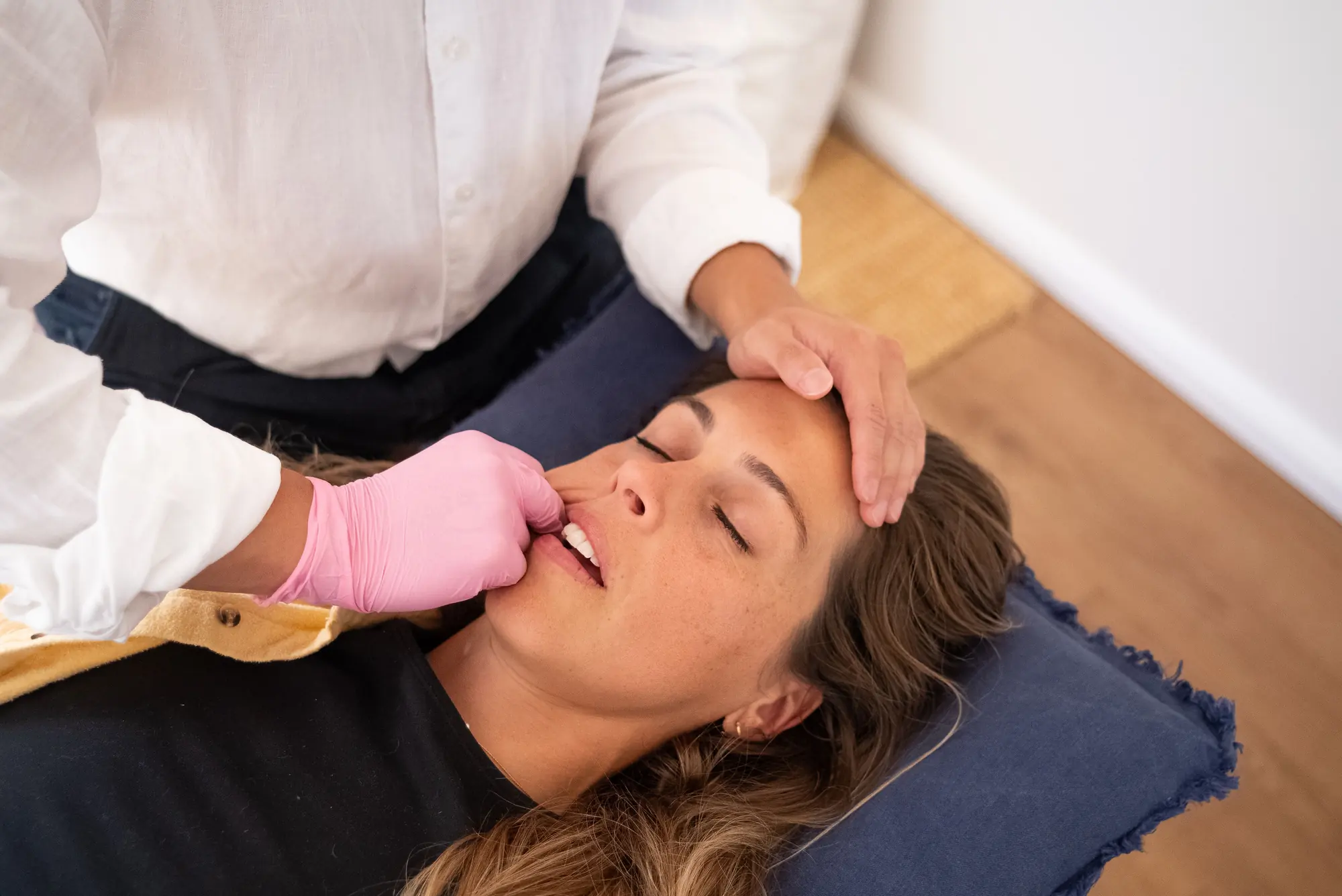
We hear about your jaw, grinding, sleep and stress, then check how your jaw opens and moves, the muscles of your jaw and neck, and how your tongue and lips rest, and screen thoroughly so nothing is missed.
Explain
What we found, what is likely driving your jaw pain, what we suggest, how long it should take and what it costs. Then you decide.
Treat
Gentle hands-on care and bodywork for the jaw muscles, neck, upper back and diaphragm, including the deep front line, a chain of fascia (connective tissue) often described as linking the jaw and tongue with the neck and diaphragm. We explain each technique and ask before we start.
Retrain
Jaw exercises and myofunctional therapy for how your tongue, lips and jaw rest: lips together, teeth apart and tongue resting on the roof of your mouth.
Review
We retest your jaw opening and comfort at set points, track your progress against your goals, and space out visits as you improve.
Scans may be needed, depending on your assessment. If they are, we arrange the referral. With your permission, we keep your dentist updated.
What the evidence says
Healthdirect and a systematic review of hands-on care and exercise for jaw pain found:
- TMJ dysfunction is common and usually improves over time
- Gentle jaw exercises can help improve how your jaw moves
- Hands-on care for the jaw and neck, alone or combined with jaw and neck exercises, has shown promising effects
That is why we combine hands-on care with exercise and retest at set points.
What you can do at home
- Lips together, teeth apart. Let your tongue rest gently on the roof of your mouth.
- Notice clenching during the day, especially when you are concentrating or stressed.
- Go soft for a while. Choose softer foods, take smaller bites and skip chewing gum.
- Support your jaw with your hand when you yawn.
- Try warmth. A warm compress on the jaw muscles for 10 to 15 minutes can ease tightness.
- Take screen breaks and move your neck and shoulders through the day.
Who we see with jaw pain
- Clenchers and grinders
Jaw tension and morning tightness, alongside your dentist.
Myofunctional therapy- Desk workers
Jaw, neck and shoulder tension from long, focused days.
Care for desk workers- Orthodontic patients
Exercises planned around braces, plates or aligners, alongside your orthodontist.
Myofunctional therapy- Headaches
Jaw pain alongside headaches and neck tension.
Headaches and migraines
Questions about jaw pain and TMJ
Can a chiropractor help with jaw pain and TMJ?
Yes, for many people. We use gentle hands-on care for the jaw muscles, neck and upper back, alongside jaw and myofunctional exercises. Research on hands-on care for jaw pain, alone or with exercise, is promising, and we work alongside your dentist.
Why does my jaw click?
Clicking usually comes from the disc inside the jaw joint moving as you open and close. It is common and often painless. If it comes with pain or locking, it is worth an assessment.
Can teeth grinding cause jaw pain?
Yes. Clenching and grinding, often linked to stress and often at night, tire and tighten the jaw muscles. Your dentist may suggest a night guard, and we work on jaw and neck tension and daytime habits.
How does myofunctional therapy help the jaw?
It retrains how your tongue, lips and jaw rest and move, for example resting your tongue on the roof of your mouth with your teeth apart. We use it alongside hands-on care as part of your plan.
Do I need to see my dentist as well?
Your dentist is an important part of the team for jaw pain, and we work alongside them. You can book with us directly, and with your permission we keep your dentist updated.
Do I need a scan for jaw pain?
You may. Whether a scan is needed depends on what we find at your assessment. If imaging will help guide your care, we arrange the referral.
Can I claim jaw pain treatment on my health fund?
Yes, if your extras cover includes chiropractic. We accept private health insurance.
Related conditions and services
Sources
- Armijo-Olivo S, et al. Effectiveness of manual therapy and therapeutic exercise for temporomandibular disorders: systematic review and meta-analysis. Physical Therapy. 2016;96(1):9-25.
- Healthdirect Australia. Temporomandibular joint (TMJ) dysfunction.
- Healthdirect Australia. Teeth grinding (bruxism).
This page is general information, not a diagnosis. Book an assessment for advice about your own situation.